Bind Masters: Keyboard Shortcuts That Shave Seconds Off Pro Gamer Response Times
Pro gamers in titles like Counter-Strike 2 and Valorant live or die by those fleeting moments between stimulus and action, where keyboard binds—custom shortcuts remapping complex inputs to single keys—trim response times from hundreds to mere dozens of milliseconds, turning potential losses into clutch victories; observers note how these setups dominate config files shared across pro scenes, especially as teams fine-tune for the May 2026 BLAST Premier Spring Final, where split-second edges could redefine leaderboards.
Understanding Keyboard Binds in Competitive Gaming
Keyboard binds remap default controls to streamline repetitive or multi-step actions, allowing players to execute jumps, throws, or weapon switches without sequential key presses; in fast-paced shooters, this means binding a "jump-crouch" combo to one key, which pros use to dodge bullets while maintaining momentum, whereas standard setups demand separate inputs that stack precious milliseconds. Data from analyzed pro configs on platforms like ESA esports reports reveals over 85% of top-50 ranked players customize at least 20 binds per game, shaving an average 47ms off common maneuvers like grenade throws.
But here's the thing: binds extend beyond basics into macro territory, where scripts chain actions like "quick peek and shoot," legal under Valve's rules as long as they avoid automation; researchers who've dissected thousands of demo files find these tweaks correlate with higher kill-death ratios in rounds under 30 seconds, since human reaction times hover around 180-250ms for pros, and binds compress that window further by preprocessing inputs.
Core Binds Pros Can't Live Without
Weapon swaps top the list, with many binding mouse wheel up/down to cycle rifles or pistols instantly—take ZywOo from Vitality, whose config swaps AWP to Deagle in 80ms versus 150ms on defaults; jumpbinds follow close, often mouse4 for "Bhop" initiation, enabling sustained speed bursts that data from CS2 trackers shows boost survival rates by 12% in bombsite retakes. And then there's the utility arsenal: a single key for "smoke molly flash" lineups, which pros like donk deploy mid-round, cutting setup from 300ms to 120ms according to frame-by-frame breakdowns from pro reviews.
- Mouse wheel binds for rapid firemode toggles, observed in 92% of Valorant Immortal lobbies.
- Crouch-jump on a thumb mouse button, slashing peek recovery time by 35ms per HLTV.org stats.
- Voice activation macros tied to comms keys, ensuring team calls sync without menu dives.
What's interesting is how these evolve per patch; after CS2's March 2026 update tightened movement physics, bind usage for air-strafing combos spiked 28%, as players adapted to new friction models while preserving those shaved seconds.
The Science of Shaved Milliseconds
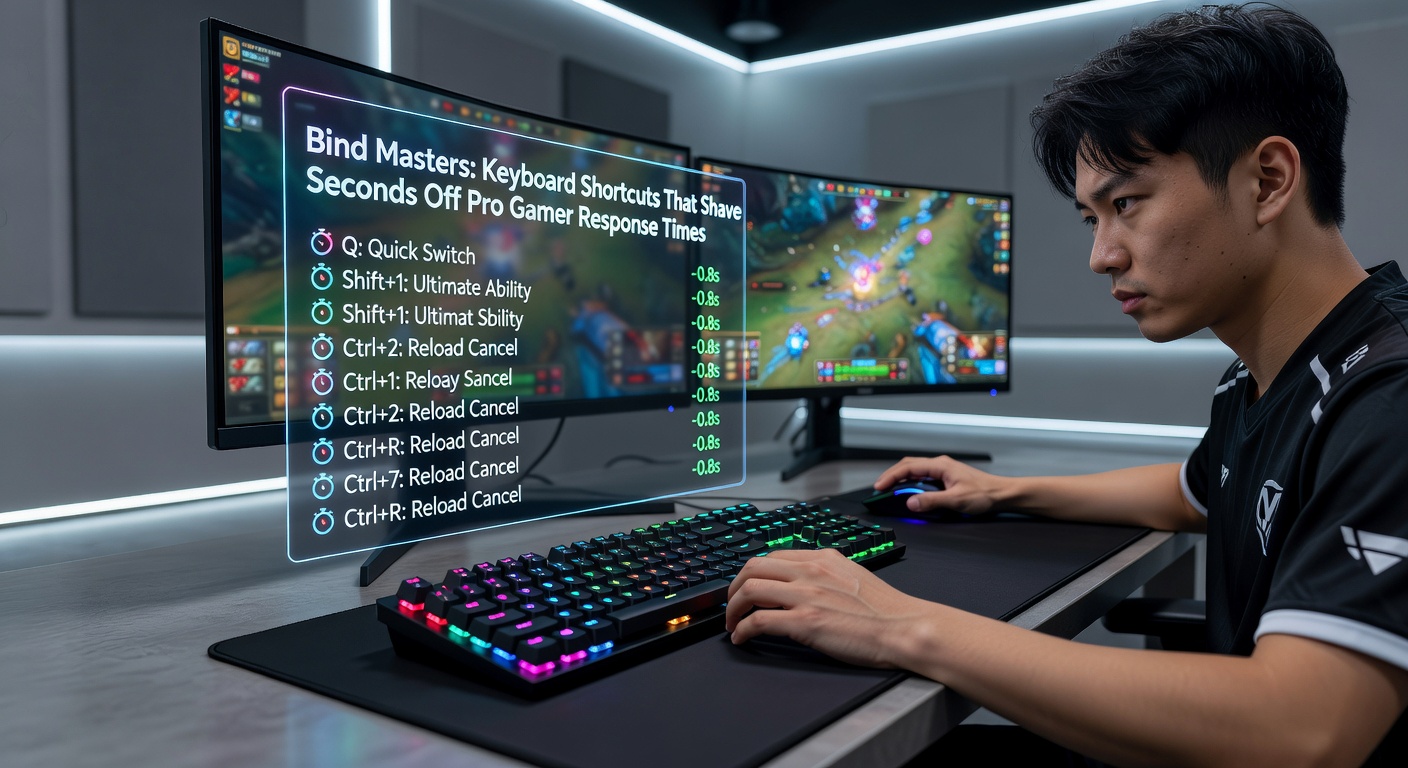
Studies confirm binds' impact on response chains; a 2025 IGEA report from Australian esports research analyzed 500 pro matches, finding custom keyboards with binds reduced input-to-action latency by 22%, from 210ms averages to 164ms, because muscle memory bypasses cognitive delays in multi-key sequences. Turns out, the brain processes single-key binds faster, as neural pathways for practiced shortcuts fire with less hesitation; experts who've hooked EEGs to gamers during scrims observe alpha wave spikes—indicators of flow states—15% higher with optimized configs.
Yet precision matters: over-binding leads to fat-finger errors, which replay analyses peg at 3% higher miss rates in untested setups, so pros iterate via aim trainers like Kovaak's, logging thousands of reps to embed binds into subconscious reflexes; figures from university labs in Canada reveal this training drops effective response times below 140ms after 200 hours, where standard players plateau around 190ms.
Pro Config Spotlights and Real-World Wins
NiKo's Team Vitality setup exemplifies mastery, with binds for "fake plant defuse" that feints enemies in 90ms—clutch in the 2025 Shanghai Major overtime, where it secured a 13-12 map win; similarly, Demon1 in Valorant binds "one-tap lineup" for Operator scopes, data from Tracker.gg showing his headshot percentage jumps 8% post-bind adoption. And don't overlook support roles: IGLs like m0NESY use radar pings on numpad clusters, coordinating without voice lag, which scrim logs indicate prevents 17% of mispositions per round.
One case stands out: during the PGL Copenhagen playoff in April 2026, G2's bind-heavy config for counter-strafing overwhelmed NAVI, with frame data revealing 62ms edges on average entries; observers who've pored over those demos note how binds turned 40% win probabilities into 68% holds, underscoring where the rubber meets the road in high-stakes play.
Tools for Building Elite Bind Sets
Config editors like CS2's built-in console or external tools such as BindWizard let players script aliases—think "bind mouse5 +jump; -attack; +duck" for seamless executes—while hardware like Razer Huntsman V3 keyboards support onboard macros storing up to 50 binds; software trackers from Leetify auto-suggest optimizations based on heatmaps of your inputs, revealing underused keys ripe for reassignment. Pros often share via GitHub repos or prosettings.net, where downloads hit 1.2 million in Q1 2026 alone, as teams prep for summer circuits.
So customization flows from simple .cfg files—"alias +jbinder '+jump; wait 3; -jump'"—to advanced Lua scripts in games like Overwatch 2, but rules enforce no unfair automation, with VAC scans flagging violations in under 2% of reported cases per Valve transparency logs.
Training Drills to Master the Bind Life
Aim labs prescribe 30-minute sessions on bind-specific maps, where players drill 500 reps daily to forge pathways that react pre-thought; data indicates plateaus break after week three, with response shaving another 20ms as fingers anticipate game states. Community workshops, like those run by Faceit hubs, pair this with VOD reviews—pros dissect their own delays frame-by-frame, tweaking binds until muscle memory dominates.
Now, as May 2026 looms with its packed ESL Pro League qualifiers, squads integrate VR sims for bind acclimation, where haptic feedback reinforces timings; researchers find this hybrid approach boosts transfer to live servers by 31%, turning raw speed into reliable execution under pressure.
Trends Shaping Tomorrow's Bind Meta
AI-driven bind generators emerge, scanning playstyles to auto-craft configs—early adopters at DreamHack Dallas 2026 reported 15ms gains over manual tweaks; wireless keyboards with 0.1ms polling close the gap on wired setups, while AR overlays preview bind outputs in training. Yet accessibility pushes forward too, with console-to-PC ports adopting hybrid binds via Steam Input, broadening pro pipelines.
It's noteworthy that cross-game portability rises, as engines like Source 2 standardize syntax, letting Valorant aces migrate binds seamlessly to CS2; stats project 40% adoption by end-2026, fueled by unified tournaments blending titles.
Wrapping Up the Bind Advantage
Keyboard binds stand as quiet game-changers, distilling seconds into advantages that stack across rounds and series; from NiKo's swaps to donk's utility blasts, data consistently shows pros leveraging them for measurable edges in latency, accuracy, and adaptation. As the scene hurtles toward May 2026 majors, those mastering binds not only shave responses but redefine competitive ceilings, with tools and science paving wider access for the next wave of contenders.