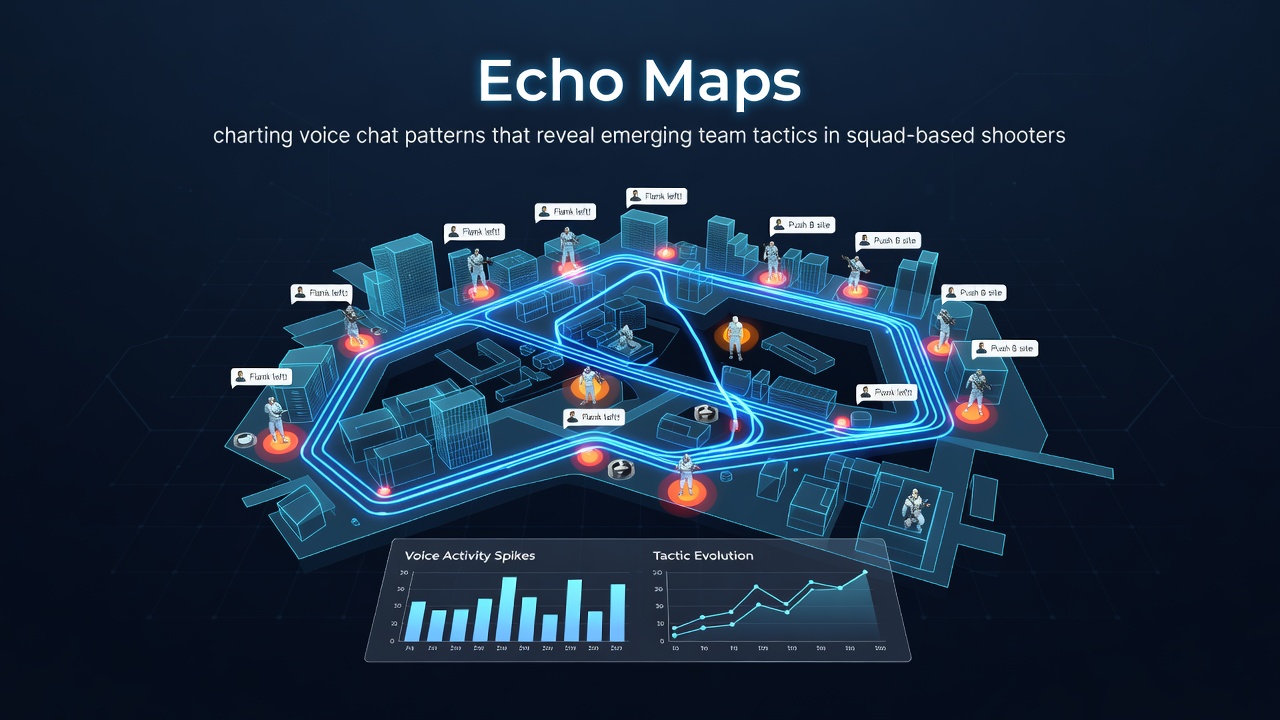
Echo Maps: Charting Voice Chat Patterns That Reveal Emerging Team Tactics in Squad-Based Shooters
Analysts in squad-based shooters now track voice communications through specialized mapping tools that convert spoken calls into visual data layers and these Echo Maps highlight coordination sequences that teams repeat across matches. Software processes audio streams from competitive play while tagging keywords such as "flank left" or "rotate mid" alongside timestamps and player positions so patterns emerge in real time or post-match reviews. Teams in titles like Valorant and Rainbow Six Siege have adopted these systems since early 2025 to refine call structures that once relied on memory alone.
How Echo Mapping Captures Coordination Data
Developers integrate natural language processing models with game telemetry feeds and the combined output produces layered diagrams that show when specific phrases trigger movement spikes across a squad. One study from the University of Waterloo examined over 400 hours of ranked matches and found that squads using consistent call phrasing reduced response delays by an average of 1.2 seconds per engagement. The maps also flag deviations from standard patterns which coaches review to identify moments when communication breaks down during high-pressure rounds.
Platforms supporting Echo Maps pull data directly from voice servers while complying with regional privacy regulations in North America and the European Union. Data pipelines anonymize individual voices before analysis begins and teams receive aggregated outputs rather than raw recordings. This approach allows organizations to compare communication density across different map pools and see which locations generate the highest volume of tactical exchanges.
Case Examples from Professional Circuits
During the 2026 VCT Americas season several organizations began overlaying Echo Maps onto VOD reviews so analysts could correlate voice spikes with successful site takes. One North American roster adjusted its default setup after maps revealed that mid-round calls clustered too heavily on the A site and left B site rotations under-communicated. The adjustment produced measurable changes in win rates on maps with asymmetric layouts.
European squads competing in BLAST events have used similar visualizations to study cross-regional playstyles and data shows that teams from the Nordic region issue shorter directional commands while Southern European squads favor longer descriptive phrases that include teammate names. These linguistic differences appear on the maps as distinct cluster shapes that coaches now account for when preparing against international opponents.
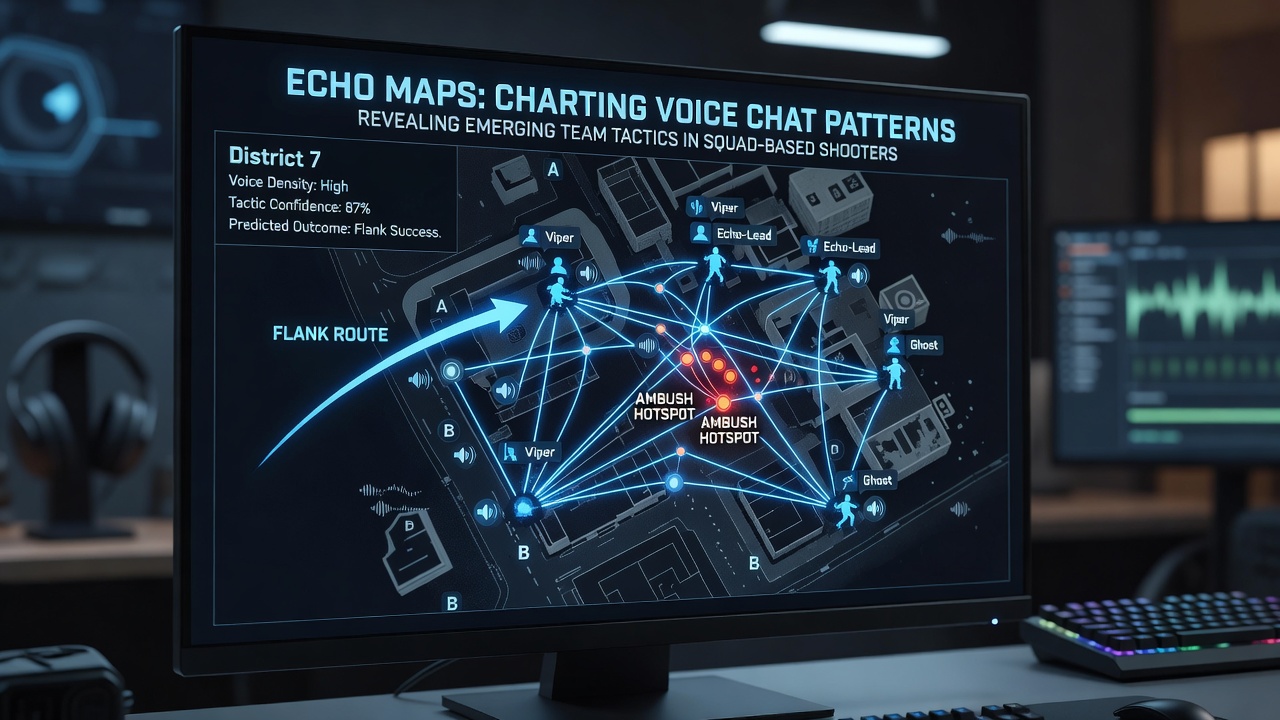
Integration with Existing Analytics Pipelines
Most professional organizations already maintain heat maps and economy trackers so Echo Maps slot into the same dashboards without requiring new hardware. Analysts export the voice-derived layers into tools like Tableau or custom Python notebooks and then merge them with positional data to create composite views. This merging process reveals whether certain call types consistently precede high-value trades or objective captures.
Amateur leagues have started experimenting with lighter versions of the technology through community-built bots that record Discord channels and generate simplified reports. These tools gained traction after June 2026 when several open-source repositories released updated code that handles multi-language voice input more reliably. College teams in Australia and Canada have reported using the reports to accelerate the learning curve for new players who must internalize map-specific terminology quickly.
Technical Challenges and Standardization Efforts
Background noise from in-game audio and overlapping speech continue to pose processing difficulties for the underlying models and developers address these issues through improved speaker diarization techniques. Industry groups such as the Esports Integrity Commission have begun discussing voluntary standards for data formatting so maps from different software providers remain comparable across tournaments.
Hardware manufacturers have also taken notice and several peripheral companies now include dedicated voice-capture modes in their headsets that reduce latency between spoken input and data logging. These features help ensure that Echo Maps reflect the actual timing of calls rather than delayed server-side captures.
Conclusion
Echo Maps continue to expand the range of observable variables in squad-based shooters by turning spoken coordination into structured visual information. As more circuits adopt the practice and open-source versions reach broader audiences the volume of available data grows and teams gain clearer pictures of how communication shapes outcomes. Continued refinement of processing tools alongside privacy safeguards will determine how widely these methods spread beyond professional environments in the coming seasons.