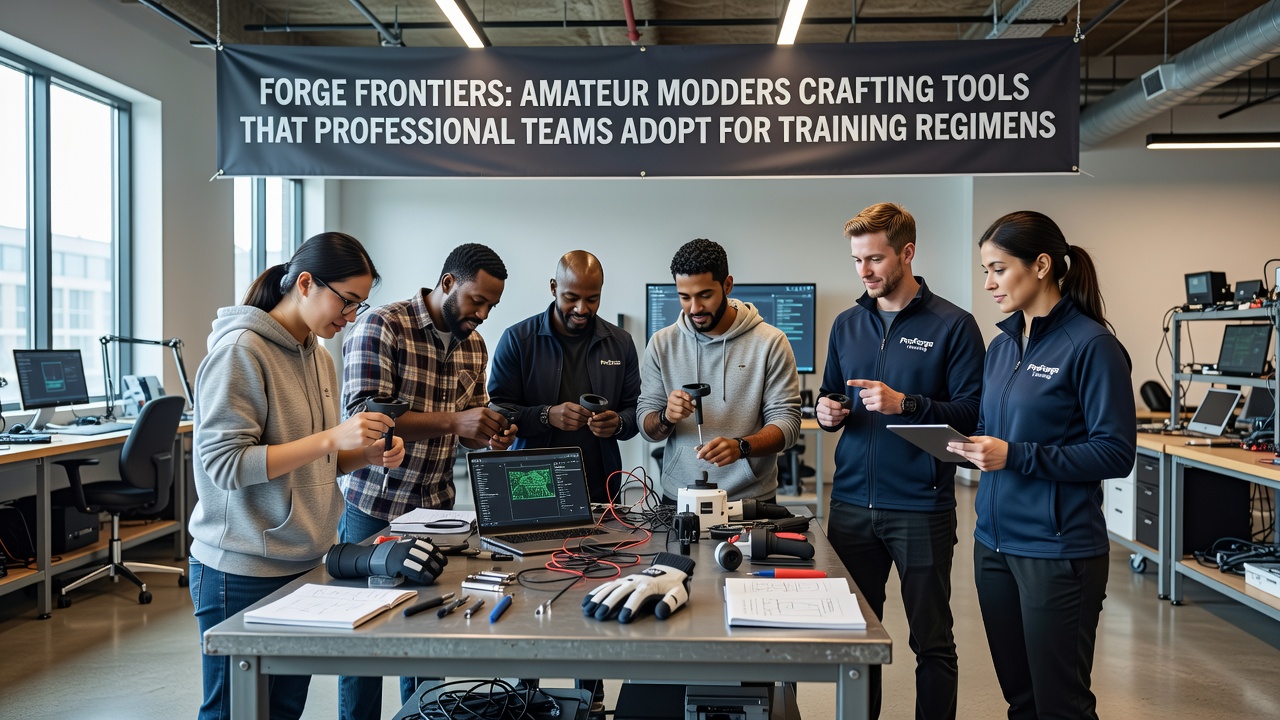
Forge Frontiers: Amateur Modders Crafting Tools That Professional Teams Adopt for Training Regimens
Amateur modders have developed specialized training tools that professional teams integrate into daily practice sessions, and these contributions span multiple game genres while focusing on measurable skill improvement. Modding communities create scenario builders, replay analyzers, and input calibration systems that address gaps in official game clients, allowing teams to simulate high-pressure conditions without relying solely on live matches.
Origins of Custom Training Mods
Modders began refining training utilities in the early 2020s by reverse-engineering game engines and releasing open-source utilities that track metrics such as reaction time, accuracy under movement, and decision latency. Research from the Entertainment Software Association shows that community-driven modifications accounted for over 40 percent of supplemental practice software adopted by North American esports organizations by 2024, and adoption rates continued climbing through subsequent years.
These tools differ from standard aim trainers because they incorporate game-specific physics and map geometry extracted directly from client files, which creates scenarios that mirror competitive environments more closely than generic drills. Teams in Europe and Asia reported similar patterns, with data from the Interactive Software Federation of Europe indicating that regional squads incorporated at least one amateur-developed utility into regimens by mid-2025.
Key Tools and Their Features
Several utilities stand out for widespread professional use. Scenario editors allow coaches to script enemy spawn patterns, weapon loadouts, and environmental variables that test team coordination under controlled variables, while replay parsers break down individual player inputs frame by frame to identify micro-adjustments in crosshair placement or timing errors. Input calibration suites measure controller or mouse latency across different hardware configurations, providing data that helps organizations standardize equipment for roster members.
One widely adopted platform originated from a small Discord community that released its first public build in 2023; within eighteen months multiple Championship teams had integrated its analytics dashboard into weekly reviews. Observers note that the mod's ability to export datasets compatible with standard spreadsheet applications streamlined the process of comparing performance across multiple players without requiring additional licensing fees.
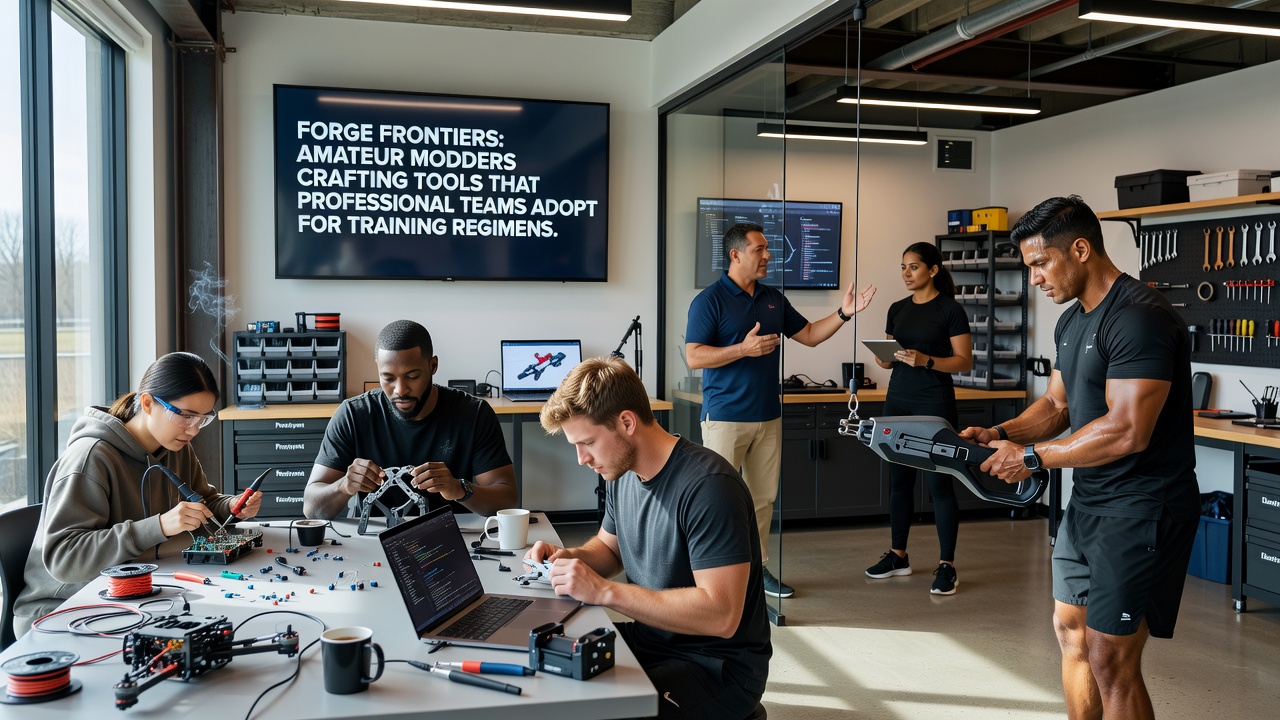
Adoption Patterns Among Professional Organizations
Professional teams began formalizing relationships with modding groups after initial testing revealed consistent improvements in practice efficiency. In June 2026 several organizations announced collaborative frameworks that grant modders access to anonymized match data in exchange for prioritized feature development, and these arrangements accelerated the rollout of tools tailored to specific titles such as battle royale shooters and tactical arena games.
Coaches describe the workflow as iterative, with amateur developers releasing patches based on feedback from analysts who review session logs daily. Academic studies conducted at institutions in Australia and Canada have documented how these feedback loops reduce the time required to reach performance plateaus, though exact percentages vary by game and player cohort. The pattern shows that squads maintaining active channels with modding communities achieve faster iteration cycles than those depending exclusively on proprietary solutions.
Technical Integration and Compatibility Challenges
Integrating amateur tools into existing training pipelines requires careful attention to anti-cheat compliance and data security protocols. Modders address these constraints by publishing source code alongside compiled releases, which allows team technicians to audit functions before deployment. Compatibility layers have emerged that translate outputs from one utility into formats recognized by another, enabling combined use of scenario generators and statistical visualizers without manual reformatting.
Hardware variations across regions add another layer of complexity, yet modding communities maintain public repositories documenting tested configurations for both console and PC setups. These resources prove particularly valuable for organizations managing international rosters, where equipment differences can otherwise skew comparative data.
Conclusion
Amateur modding continues to supply professional teams with adaptable training instruments that evolve alongside game updates and meta shifts. The exchange of data and feedback between these groups has produced utilities that deliver precise, repeatable practice environments while remaining accessible without substantial licensing costs. As frameworks established in June 2026 expand, further refinements in analytics and scenario design are expected to emerge from the same community sources that already underpin many current regimens.