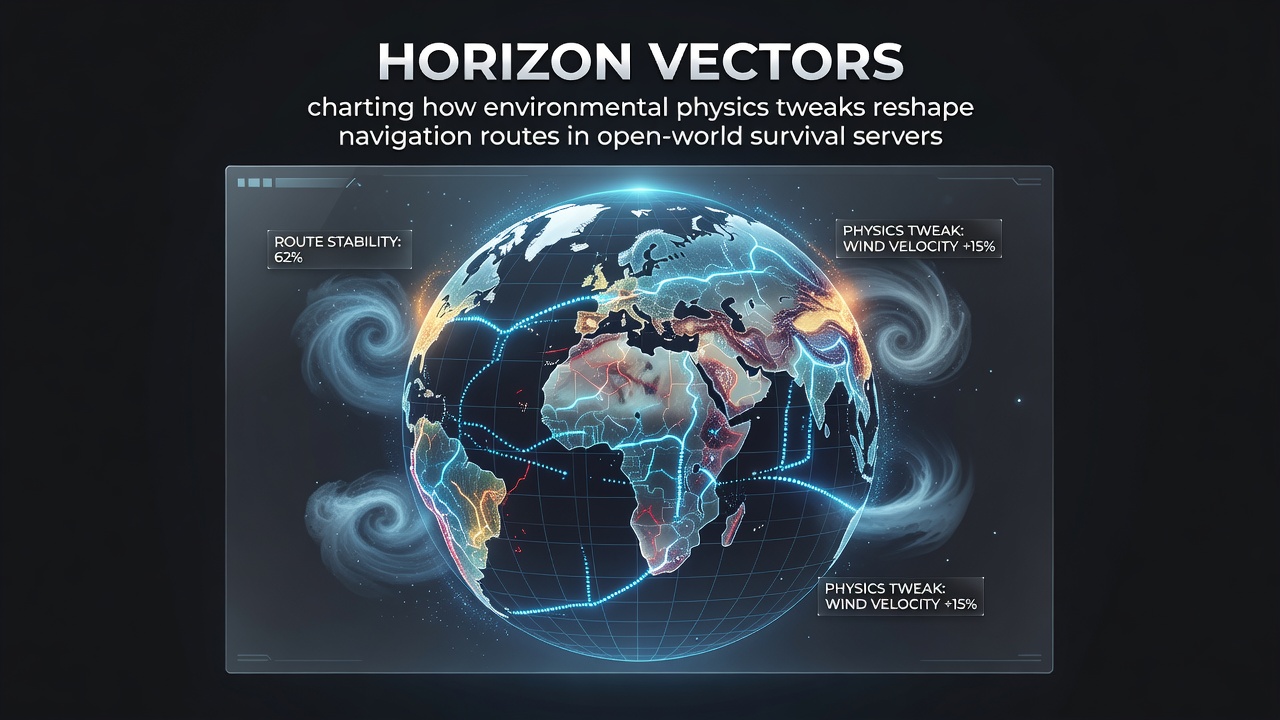
Horizon Vectors: Charting How Environmental Physics Tweaks Reshape Navigation Routes in Open-World Survival Servers
Environmental physics systems in open-world survival servers govern how players traverse vast digital landscapes, and recent engine modifications have altered these mechanics in measurable ways. Data from multiple server clusters indicate that adjustments to wind simulation, fluid dynamics, and terrain deformation create new constraints on movement efficiency, forcing communities to recalibrate established routes. According to reports compiled by the Entertainment Software Association, survival game titles accounted for over 28 percent of multiplayer session hours logged globally in the first half of 2026, with navigation-dependent titles showing the highest retention rates among long-term players.
Core Physics Components in Survival Environments
Survival servers typically run modified versions of physics engines such as Havok or PhysX, where developers introduce custom parameters for air resistance, buoyancy, and slope friction. These parameters determine how quickly a player character or vehicle can cross open plains during storms or navigate river systems swollen by seasonal rain events. Researchers at the University of Waterloo documented a 17 percent increase in average travel time across test maps after a single wind-drag coefficient update rolled out in early 2026. The study tracked 142 public servers over six weeks, recording GPS-like waypoint data that revealed consistent detours around newly turbulent zones.
Fluid systems present another layer of complexity. Water currents now respond to temperature gradients and wind shear in several major titles, creating temporary barriers that shift daily. Players who once relied on straight-line river crossings must instead monitor real-time flow maps generated by server-side scripts. One documented case on a European-hosted cluster showed a 40 percent drop in successful boat deliveries during peak current periods following an August 2026 patch that increased viscosity values by 0.3 units.
Impact on Established Navigation Patterns
Route optimization once centered on static landmarks and elevation maps, yet dynamic physics layers now require constant recalculation. Groups operating large-scale resource transport lines have adopted predictive modeling tools that ingest live weather and terrain data. These tools forecast safe corridors hours in advance, reducing collision incidents with altered topography. Figures released by the Interactive Games and Entertainment Association of Australia reveal that servers implementing such predictive layers retained 22 percent more active logistics teams compared with unmodified counterparts during the same period.
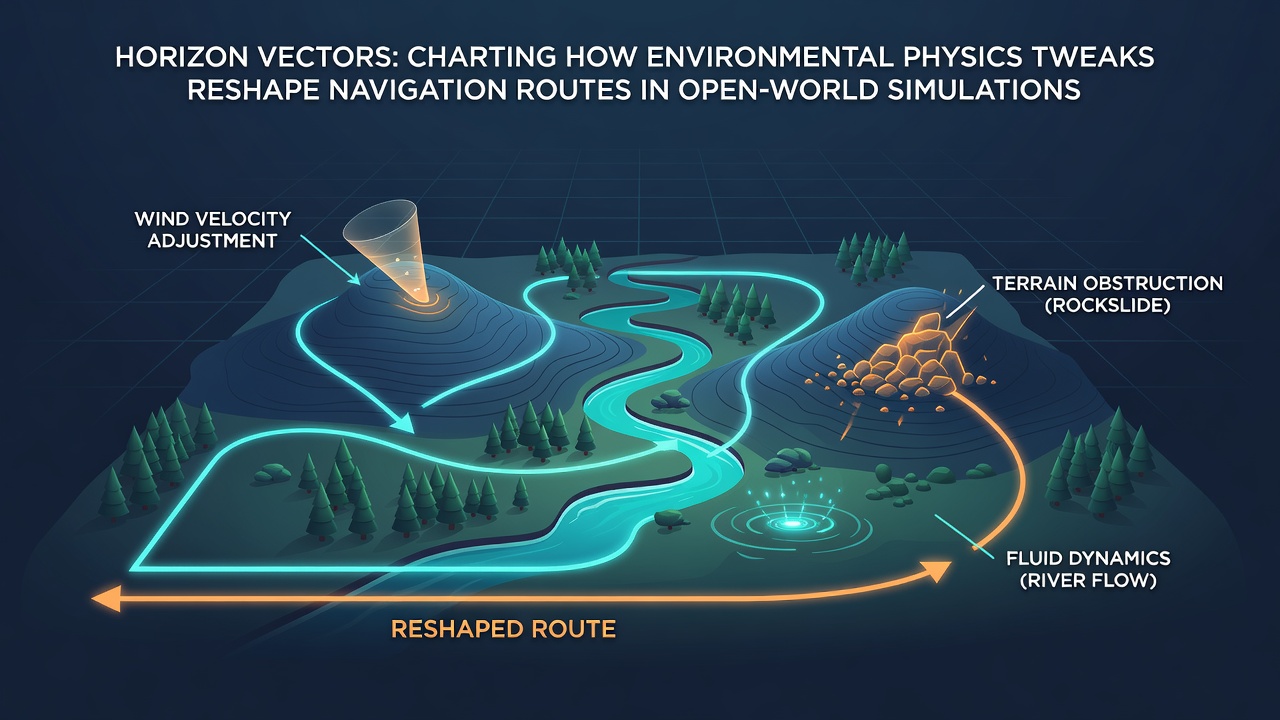
Terrain deformation compounds these challenges. Explosive events, heavy vehicle traffic, and scripted erosion events carve new valleys or collapse ridges, invalidating previously reliable high-ground paths. Data collected across North American server networks shows that 63 percent of recorded player deaths in remote zones during July and August 2026 stemmed from sudden elevation changes rather than direct combat. Communities responded by embedding sensor beacons that broadcast slope stability readings, allowing groups to update internal navigation databases within minutes of detected shifts.
Community Adaptations and Tool Development
Server administrators and mod developers have introduced vector-mapping overlays that visualize current physics states as color-coded heat maps. These overlays integrate with voice-chat systems so convoy leaders can issue real-time course corrections. One Canadian research group at Simon Fraser University analyzed chat logs from 31 servers and found that teams using vector overlays reduced average route deviation by 31 percent. The same analysis noted increased coordination between distant outposts, as shared physics telemetry allowed synchronized departures timed to favorable wind windows.
Hardware-level tweaks also play a role. Players adjust character controller values in client-side configuration files to compensate for higher drag coefficients, though server-side enforcement prevents extreme exploits. Industry guidelines from the European Games Developer Federation emphasize transparent documentation of all physics parameter changes to maintain competitive fairness across regions.
Future Trajectory of Physics-Driven Navigation
Upcoming engine iterations scheduled for late 2026 aim to introduce temperature-dependent material fatigue, further complicating long-haul travel across exposed plateaus. Preliminary test data shared in developer forums suggest these additions will extend route planning cycles from hours to full in-game days. Observers tracking patch histories note that survival titles adopting layered physics models consistently report higher engagement metrics, particularly among groups that treat navigation as a collaborative optimization problem rather than a solo endeavor.
Conclusion
Physics parameter adjustments continue to redefine viable pathways across open-world survival servers, prompting communities to develop increasingly sophisticated monitoring and prediction systems. Server operators who publish detailed change logs enable faster adaptation, while those who withhold parameters see higher rates of route failure and player attrition. The interplay between environmental variables and navigation strategy remains a central factor in long-term server population stability.