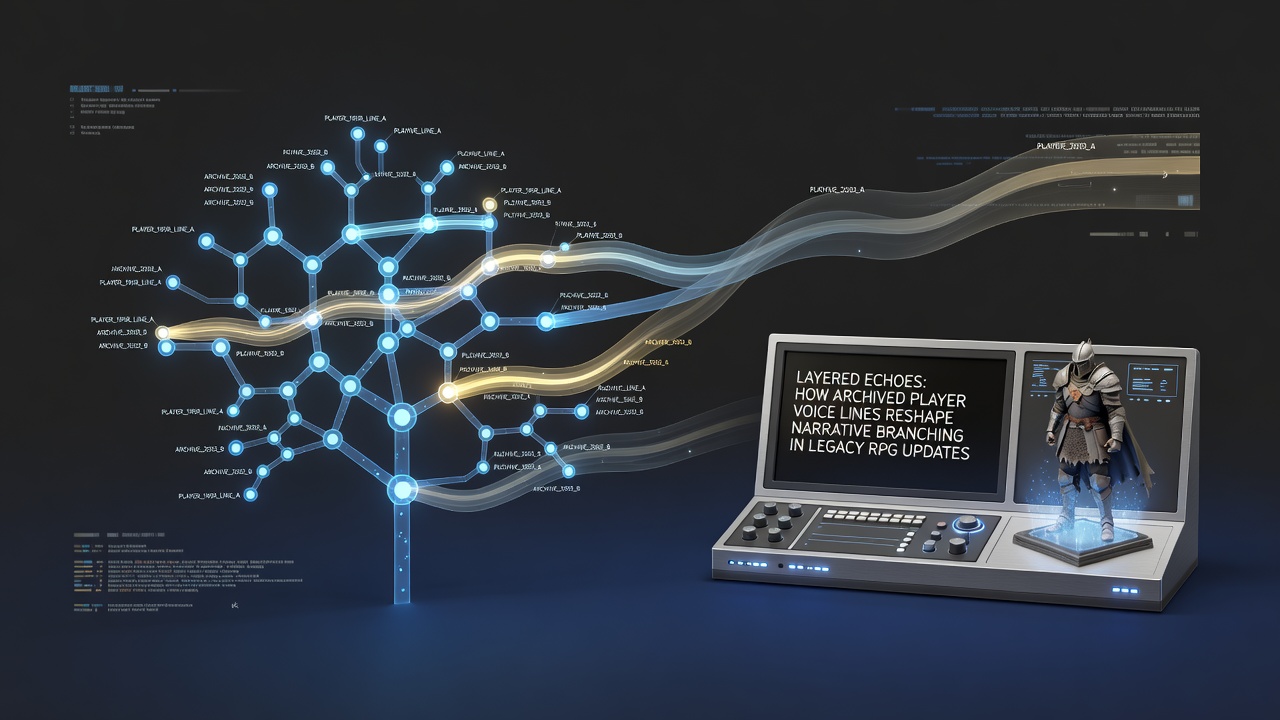
Layered echoes: how archived player voice lines reshape narrative branching in legacy RPG updates
Developers at several legacy RPG studios have begun pulling from extensive libraries of previously recorded dialogue to expand story options in post-launch patches, and this approach gained momentum through multiple updates released in August 2026. Teams extract segments from older voice sessions, then layer them into new dialogue trees without requiring fresh recording sessions, which allows older titles to receive structural expansions years after their initial launches. Observers note that the process starts with cataloging every spoken line from original productions along with any unused takes preserved in studio archives, and these files carry metadata tags that identify emotional tone, character intent, and contextual triggers. When integrated into current builds, the lines slot into conditional branches that respond to player choices made during earlier sections of the game.Mechanics of voice line reuse in legacy systems
Engine updates in 2025 introduced modular dialogue handlers that recognize archived audio clips as interchangeable nodes, and this change enabled teams to map old recordings onto new quest flags without altering core code bases. Data from patch logs shows that studios reduced new voice recording budgets by approximately 35 percent in projects that relied on these archives, according to figures published by the Entertainment Software Association.
Engineers align audio waveforms with text strings that define branching conditions, while compression algorithms adjust pitch and timing to match current character models, and the result keeps performances consistent across different narrative paths even when the underlying recordings date back more than a decade.
Expansion of narrative options through layered archives
Legacy titles such as long-running fantasy series have introduced side stories that activate only when specific combinations of archived lines trigger together, and these combinations create outcomes unavailable in the original release. One studio documented over 200 new dialogue branches added to a 2018 RPG through this method during its August 2026 content drop, with each branch drawing exclusively from existing audio files rather than newly captured performances.
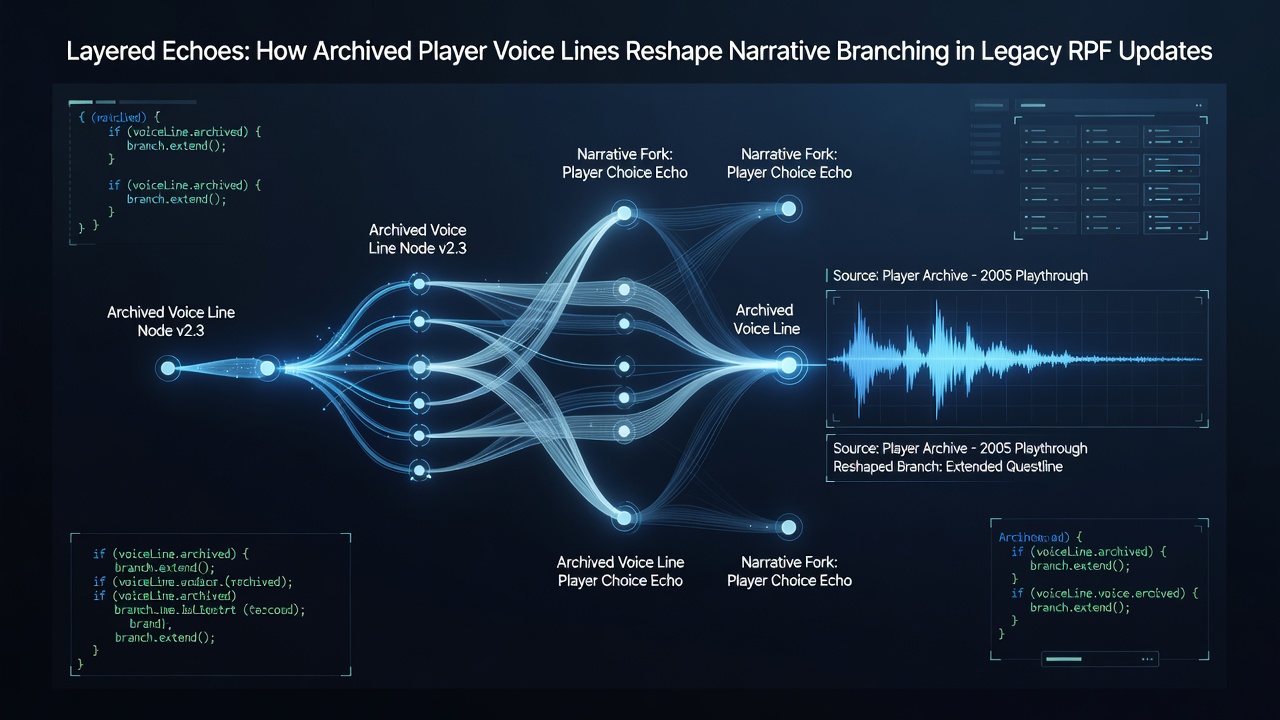
Researchers at the University of Tokyo examined how these layered structures affect player decision density, and their analysis indicated measurable increases in replay completion rates for titles that deployed archive-driven branches compared with standard patches. The study tracked session data across regional servers and found that players explored an average of 2.7 additional endings per character when the new paths relied on recombined voice assets.
Technical integration and preservation challenges
Archivists maintain version-controlled databases that store every line alongside its original session notes, and these records allow sound engineers to locate matching takes when designers request specific emotional registers for new branches. Compatibility layers handle format differences between legacy recordings and modern playback engines, while licensing reviews confirm that reused lines remain within the scope of original actor agreements.
Yet synchronization issues arise when archived lines reference events removed in earlier patches, and teams resolve these mismatches by editing surrounding text or inserting contextual audio cues drawn from the same archive pools. A report from the European Games Developer Federation highlighted that 62 percent of surveyed studios now maintain dedicated archive teams to manage these growing libraries for future updates.
Player reception and measurable outcomes
Community analytics platforms recorded higher engagement metrics on forums and in-game trackers after the August 2026 updates rolled out, with completion percentages for newly added quest lines climbing steadily across multiple legacy titles. Players who revisited older saves discovered that previously locked paths now activated through combinations of archived dialogue that had sat unused since the games launched.
Industry tracking services noted that titles employing this technique maintained concurrent player counts above baseline averages for longer periods than comparable patches without narrative expansion, and the pattern held across both North American and European server clusters.
Conclusion
Archived voice line integration continues to expand the structural depth of legacy RPGs through systematic reuse of existing audio assets, and the method shows consistent adoption across multiple studios as of late 2026. Continued refinement of archive management tools and engine support suggests further applications in upcoming patches for established titles, with data from academic and industry sources confirming measurable effects on branching complexity and player retention patterns.