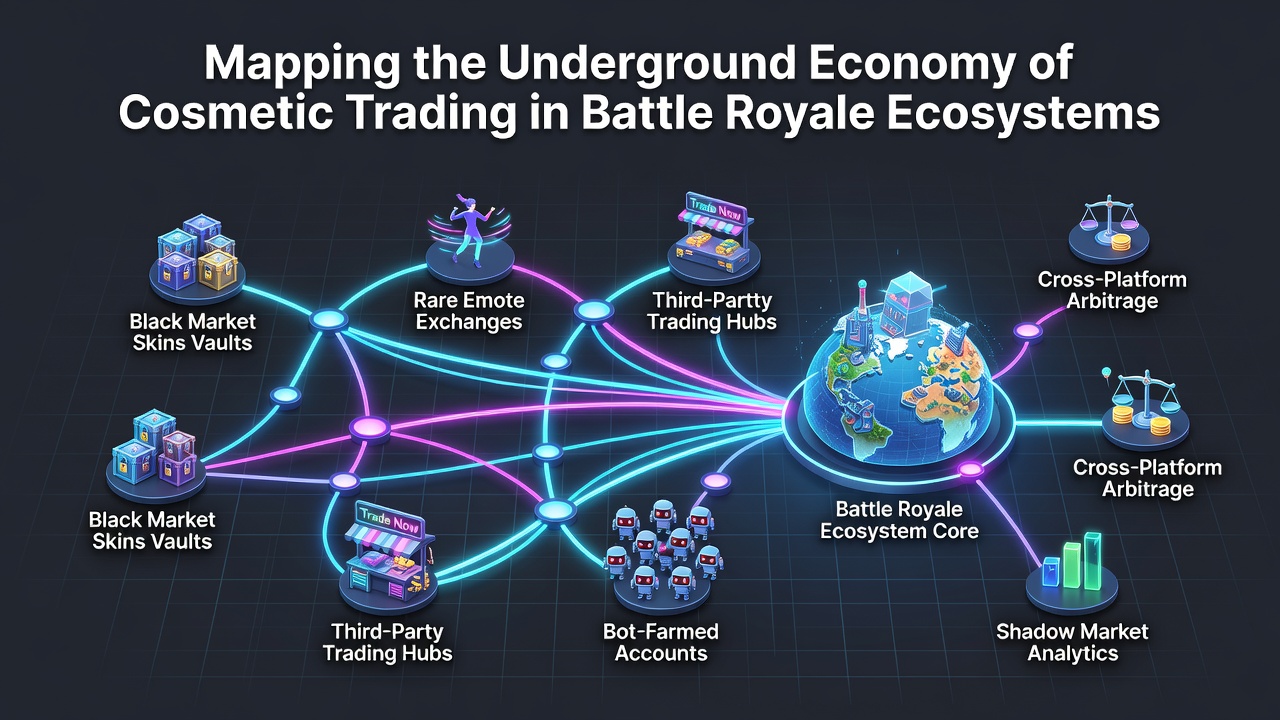
Mapping the Underground Economy of Cosmetic Trading in Battle Royale Ecosystems
Battle royale ecosystems have developed intricate layers of cosmetic trading that operate outside official channels, and researchers tracking these patterns note the movement of digital items such as weapon skins, character outfits, and vehicle wraps across titles including Fortnite, Apex Legends, and PUBG. Data compiled through transaction logs and platform monitoring shows that players exchange these cosmetics for real currency on third-party sites, Discord servers, and private forums despite terms of service prohibitions from game publishers.
Core Mechanisms Driving the Trade
Account trading forms one primary pathway where users transfer entire profiles containing rare cosmetics that were originally obtained through limited-time events or battle passes, and payment processors facilitate these exchanges through cryptocurrency or gift card codes to reduce traceability. Another avenue involves direct item sales where intermediaries act as brokers, holding cosmetics in temporary storage accounts until buyers complete transfers, and this method gained visibility after several high-profile enforcement actions in early 2025 that prompted traders to adopt more layered verification systems.
Scale and Geographic Patterns
Figures from industry monitoring groups indicate that the annual volume of cosmetic transactions in battle royale titles reached several hundred million dollars by mid-2026, with concentrated activity in regions where local economies make such trades attractive as supplemental income. Observers note spikes during major seasonal updates when new cosmetic drops create immediate demand, and August 2026 saw particularly elevated volumes following a cross-game collaboration event that introduced limited-edition items tradable only through unofficial routes.
Studies conducted by academic teams at institutions in North America and Asia have mapped server cluster activity to identify hubs, revealing that North American and European markets often serve as origin points for high-value cosmetics while Southeast Asian networks handle higher volumes of smaller transactions. These patterns emerge from analysis of login data combined with marketplace listings, showing how supply chains form across time zones to maintain continuous trading cycles.
Platforms and Intermediary Networks
Third-party marketplaces operate with varying degrees of sophistication, some using automated bots to list and price cosmetics based on rarity algorithms while others rely on manual moderation to avoid detection from game publishers. Payment flows frequently route through multiple wallets or prepaid services, and researchers have documented how these layers help participants manage chargeback risks that arise when one party disputes a transaction after delivery.
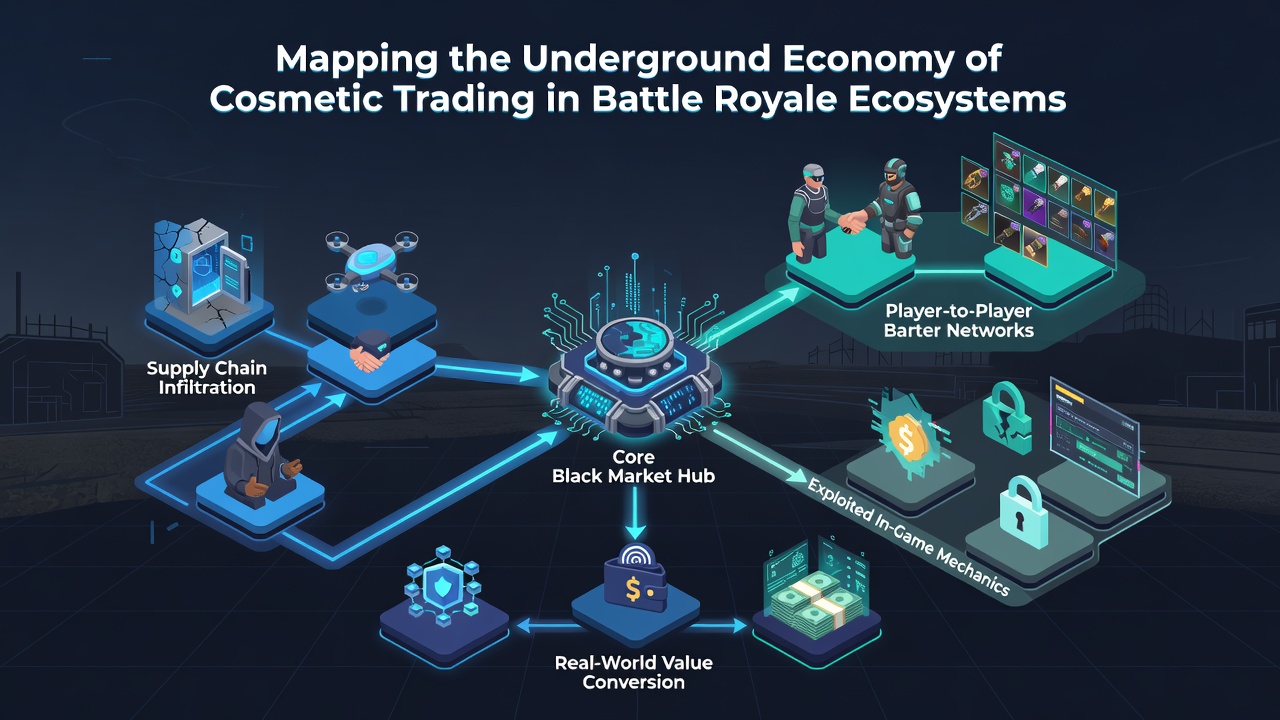
Discord communities and encrypted messaging apps function as discovery layers where traders advertise availability and negotiate terms before moving to private channels for completion, and this structure allows rapid adaptation when specific servers face shutdowns or account bans. Data from the Entertainment Software Association highlights how such adaptations have sustained market resilience even after repeated platform interventions.
Regulatory and Publisher Responses
Game companies deploy detection systems that flag suspicious account transfers and issue permanent bans, yet these measures have not eliminated the underlying demand that fuels the economy. Government agencies in multiple jurisdictions have begun examining digital item trades under consumer protection frameworks, and a 2025 review by Canadian authorities examined how such markets intersect with broader digital goods regulations without classifying them as traditional gambling activities.
European Union digital market reports have similarly tracked the growth of secondary economies around live service games, noting that enforcement remains fragmented across member states. Those studying the sector point out that publishers continue to experiment with official trading features in select regions as a potential containment strategy, though implementation has remained limited to non-battle-royale titles so far.
Conclusion
The underground cosmetic economy in battle royale ecosystems reflects ongoing tensions between player desire for customization and publisher control over digital assets, and ongoing monitoring by research organizations continues to document how these markets evolve in response to technological and regulatory shifts. Transaction data collected through 2026 demonstrates persistent activity despite enforcement efforts, underscoring the structural role these trades play within broader gaming communities.