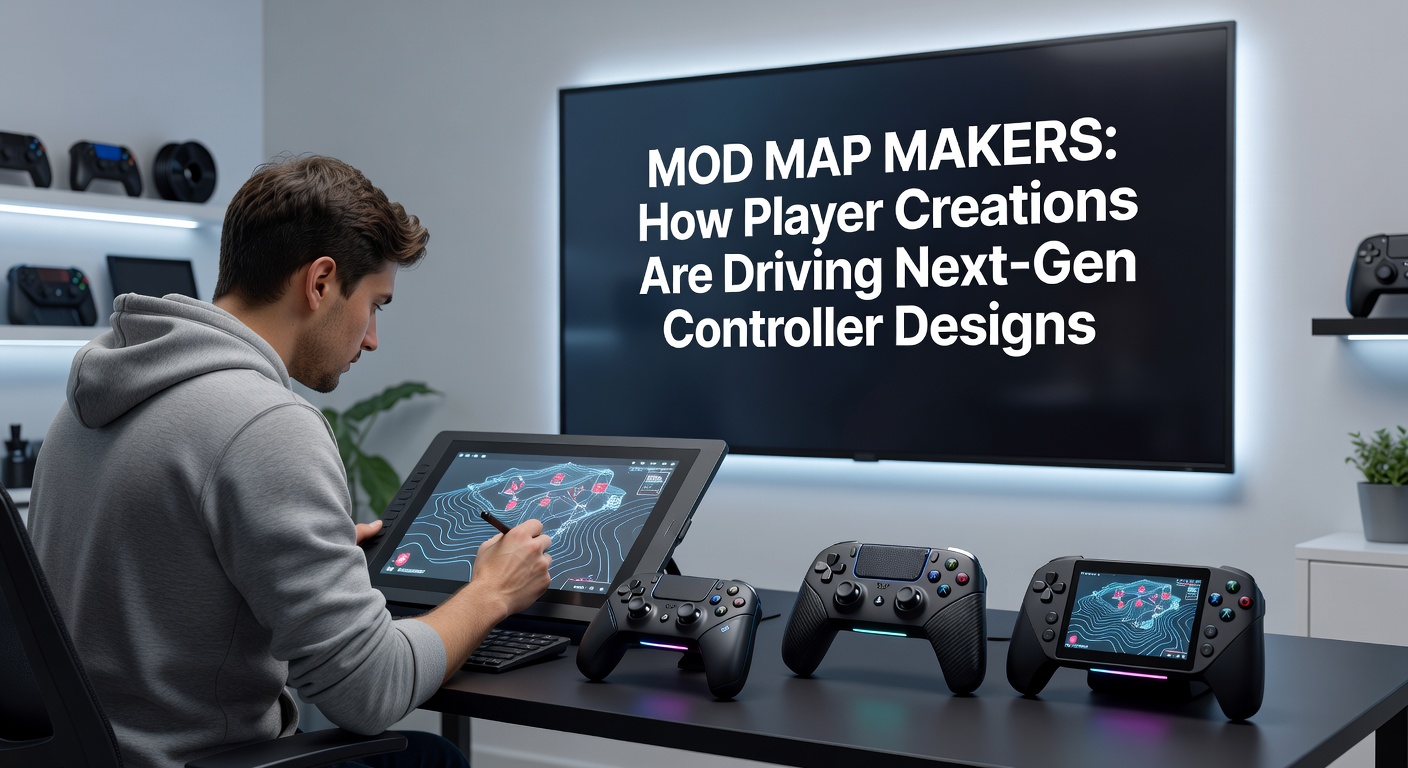
Mod Map Makers: How Player Creations Are Driving Next-Gen Controller Designs
Player communities have long experimented with game modifications and custom maps yet their influence now extends directly into hardware development where mod map makers shape the physical interfaces used in next-generation controllers. Developers track these community projects through public repositories and feedback channels because patterns emerge in how players interact with virtual environments and those patterns translate into tangible design adjustments for buttons, triggers, and haptic systems.
Community Creations as Design Catalysts
Mod map makers construct elaborate scenarios that test movement mechanics, precision aiming, and environmental navigation in ways official developers rarely anticipate. Researchers at various universities have documented cases where custom maps demand repeated micro-adjustments to input sensitivity and those demands prompt hardware teams to prototype new controller configurations. Data collected from thousands of user sessions shows elevated usage of certain button combinations during community events which manufacturers then incorporate into ergonomic testing cycles.
One notable example involves a series of parkour-focused maps released in early 2025 that required players to execute rapid directional changes while maintaining aerial control. Those maps generated performance logs indicating that standard analog stick tension proved insufficient for sustained accuracy so controller engineers adjusted spring mechanisms and added variable resistance options in subsequent prototypes. Observers note that similar feedback loops have accelerated since 2024 when several major studios began sharing anonymized telemetry from modded servers with their hardware partners.
Technical Adaptations Emerging from Player Data
Hardware teams analyze heatmaps and input frequency reports generated by active mod communities to identify stress points on existing controllers. Studies from institutions such as the University of Tokyo's Human Interface Laboratory reveal that players tackling complex custom maps exhibit distinct grip patterns and thumb placement shifts compared with standard gameplay. These findings have led to modular thumbstick designs that allow users to swap components based on preferred map styles.
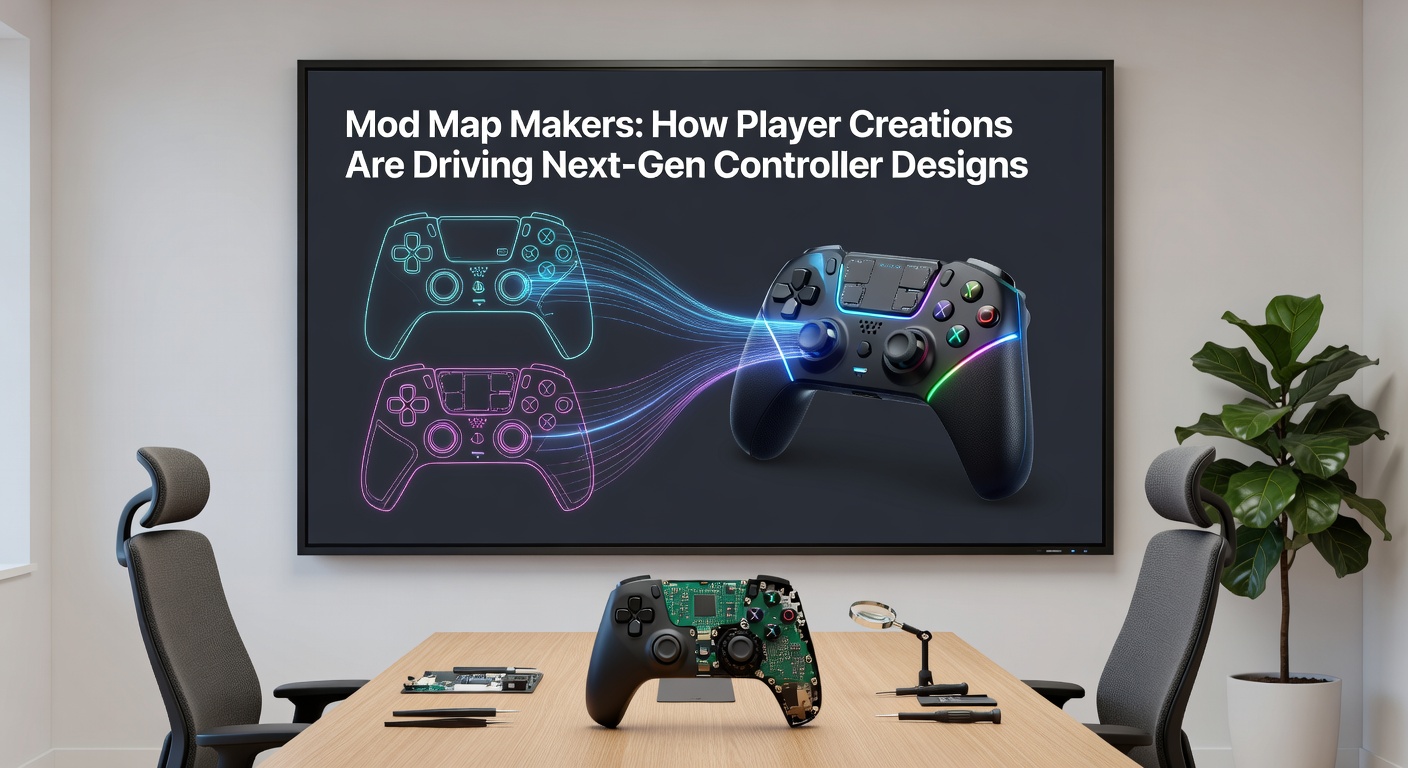
Adaptive trigger systems represent another direct outcome. Maps that emphasize timing-based interactions have highlighted limitations in fixed-response triggers prompting the integration of pressure-sensitive zones that adjust dynamically. Industry reports indicate that prototypes incorporating these zones entered testing phases in late 2025 with initial results showing improved consistency across diverse player skill levels. Manufacturers continue to refine these features ahead of broader rollouts expected around May 2026 when several console refreshes are scheduled.
Global Collaboration and Standardization Efforts
Cross-regional communities contribute distinct preferences that influence controller layouts on a worldwide scale. European modding groups often prioritize precision for simulation-style maps while North American and Asian scenes focus on competitive speed and reaction times. According to a 2025 report by the Consumer Technology Association these regional variations have prompted manufacturers to develop region-specific firmware options that calibrate response curves based on dominant map types in each market. Such customization reduces the need for aftermarket modifications while meeting player expectations shaped by community content.
Academic partnerships have formalized some of these exchanges. Research teams collaborate with mod platforms to gather structured datasets that inform both software updates and physical redesigns. The resulting hardware frequently includes exposed calibration tools so end users can fine-tune settings without voiding warranties which mirrors the open nature of the original community creations.
Future Trajectories for Controller Evolution
Looking ahead to May 2026 several manufacturers plan public beta programs that invite mod map makers to submit custom scenarios specifically for controller validation. These programs build on existing telemetry pipelines yet add direct channels for hardware feedback. Participants receive early-access devices equipped with expanded sensor arrays that capture nuanced movements during map testing and the aggregated results feed into final production decisions.
Supply chain adjustments already reflect this shift as component suppliers prepare modular parts that support rapid iteration. Figures from recent trade analyses show increased orders for customizable trigger assemblies and multi-axis sensors which align with demands observed in community-driven environments. This approach keeps development cycles responsive to emerging playstyles without requiring complete redesigns for each new title.
Conclusion
Player-generated maps and modifications continue to supply detailed performance data that guides controller innovation at multiple levels. From grip ergonomics to adaptive input systems the contributions of mod communities have become integrated into standard development workflows. As hardware reaches new milestones in 2026 the ongoing dialogue between creators and manufacturers ensures that next-generation designs accommodate the creative range already present in player-driven content.