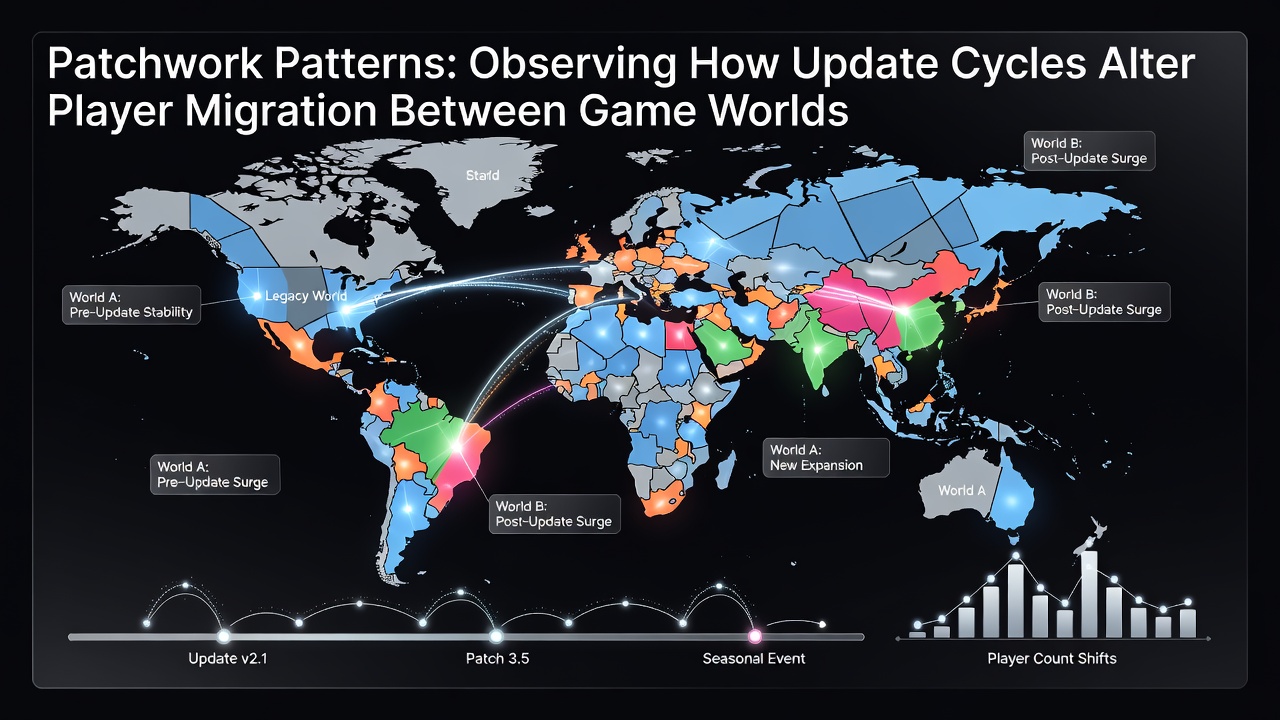
Patchwork Patterns: Observing How Update Cycles Alter Player Migration Between Game Worlds
Live service games release patches at regular intervals and these updates frequently trigger shifts in player populations across servers and titles. Developers adjust balance mechanics, introduce new content, or modify economy systems while communities respond by relocating to environments that better match their preferences after each cycle completes.
Tracking Update Frequency and Population Shifts
Major titles publish balance patches every four to six weeks on average and researchers at the Entertainment Software Association have documented corresponding spikes in account transfers and server population changes within days of deployment, according to industry-wide telemetry shared in their 2025 annual report. Smaller hotfixes arrive weekly yet these incremental changes rarely produce the same scale of movement until cumulative effects become visible to the broader player base.
Battle royale and massively multiplayer online titles show the clearest patterns because their economies and progression systems directly influence daily engagement. When a patch reduces resource spawn rates in one world, for instance, groups often migrate toward servers where those resources remain abundant until the next scheduled adjustment restores equilibrium.
Mechanics Driving Cross-World Movement
Players evaluate patch notes against their established playstyles and then decide whether existing characters or communities still offer viable progression paths. Those who favor competitive ranked modes tend to follow professional teams that switch servers after balance changes favor different character archetypes or map rotations. Observers tracking server logs note that migration peaks occur between forty-eight and seventy-two hours after patch deployment when initial testing concludes and larger populations act on the new information.
Cross-game movement follows similar logic. A substantial update in one franchise can draw players away from another title that has not received comparable attention in recent months. Data collected across multiple platforms during the July 2026 season illustrated this dynamic when several survival games released simultaneous expansion content while established battle royale titles remained in maintenance mode.
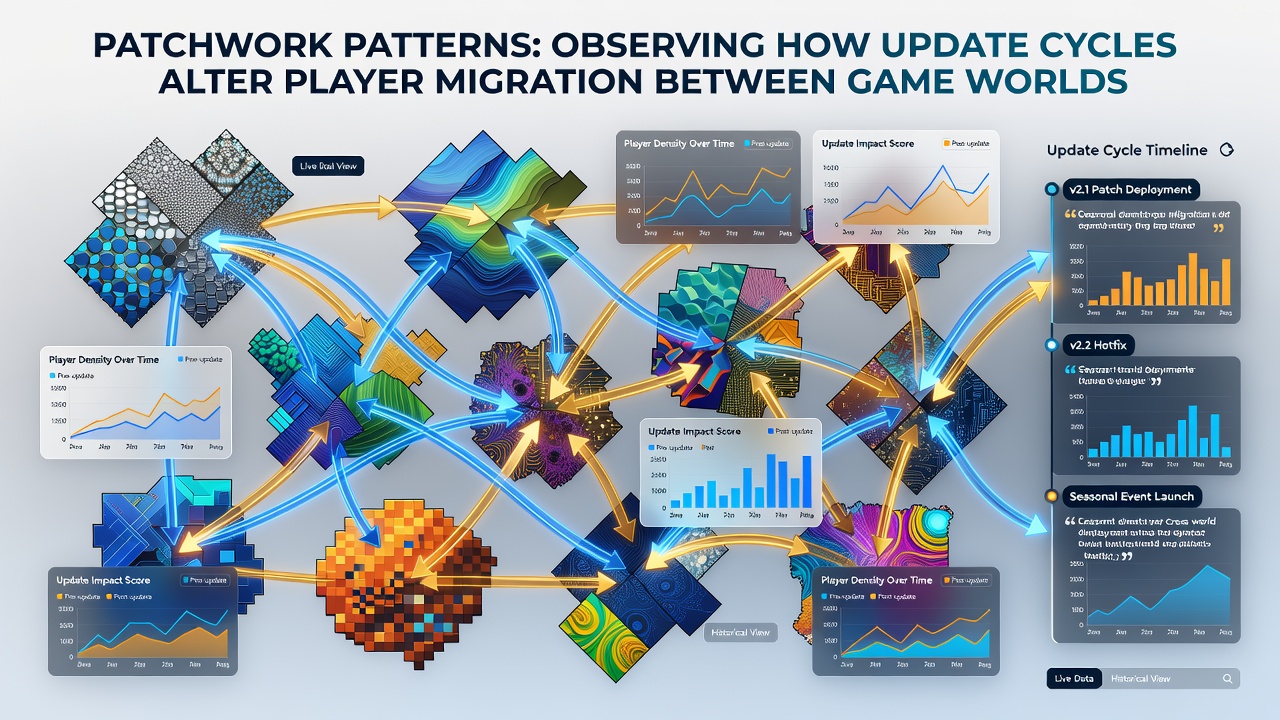
Regional and Temporal Variations in Migration
Server clusters located in different time zones experience staggered effects because patch deployment windows rarely align globally. European servers often receive updates during early morning hours while North American and Asia-Pacific clusters see changes later in teh same calendar day, creating overlapping waves of evaluation and relocation. Analysts from the European Games Developer Federation have recorded these staggered patterns in quarterly infrastructure reports and they note that population redistribution frequently stabilizes within one week when no additional patches intervene.
Seasonal events layered on top of standard cycles amplify movement further. Summer tournaments scheduled for July 2026 coincided with several balance patches and produced temporary spikes in cross-title transfers as amateur teams sought optimal practice environments before competition brackets locked in.
Community and Economic Factors
Player-run economies inside persistent worlds respond quickly to patch changes and those responses accelerate migration. When crafting costs increase or certain item classes lose value, traders relocate inventories to markets where demand remains high. Guilds and clans similarly reassess long-term viability and many maintain secondary bases in alternate titles precisely to hedge against unfavorable updates.
Communication tools outside the games themselves accelerate these decisions. Patch discussion threads and data dashboards allow communities to compare outcomes across multiple servers before committing to transfers. Those who monitor public API feeds can identify emerging population trends within hours and position themselves ahead of larger waves.
Longer-Term Ecosystem Effects
Repeated migration cycles gradually reshape server demographics and developer strategies. Titles that lose significant populations after consecutive patches sometimes introduce compensating content in follow-up updates to reverse the flow. Meanwhile servers that consistently gain players after balance changes attract additional development attention and marketing resources.
Archival projects that compile historical patch data across multiple franchises help identify recurring patterns. Teams maintaining these libraries have shown that certain update types, such as economy reworks or competitive ranking system overhauls, reliably produce measurable population redistribution regardless of the specific game involved.
Conclusion
Update cycles continue to function as primary drivers of player redistribution across game worlds and the resulting patchwork of population changes reflects both technical deployment schedules and community decision-making processes. Observers tracking these movements gain clearer insight into how live service ecosystems maintain balance through continuous adjustment and relocation rather than static design alone.