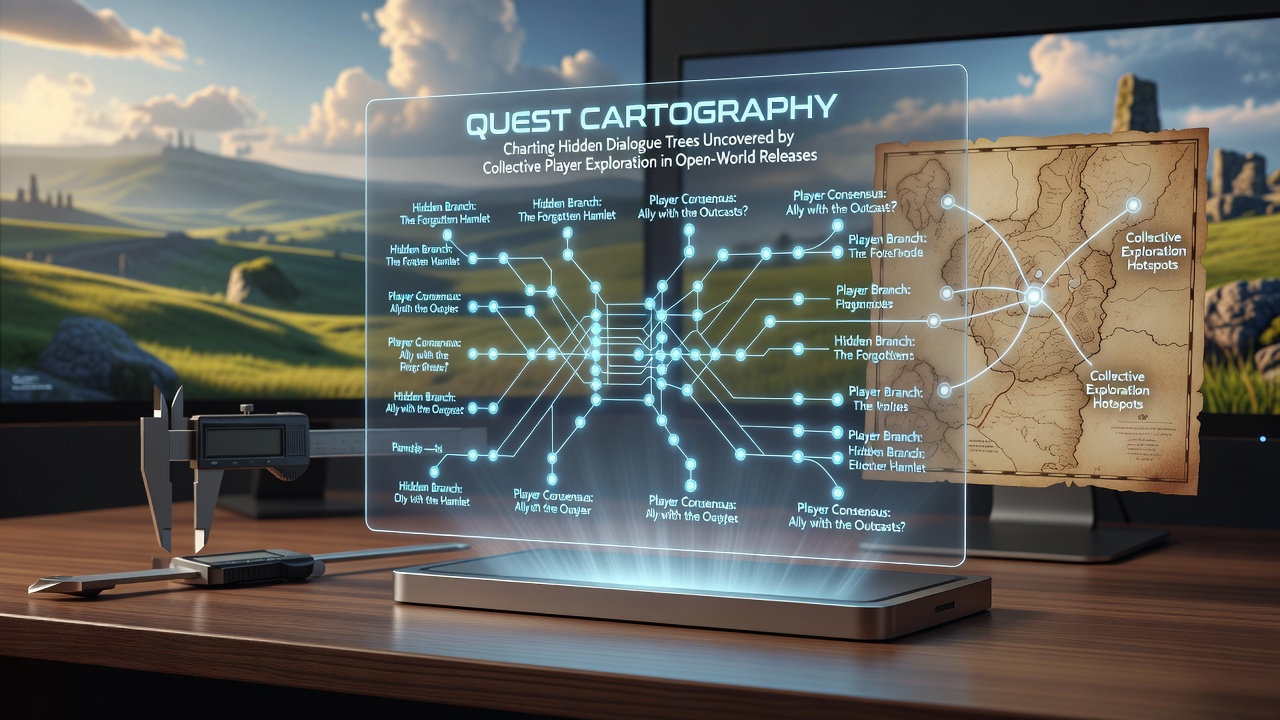
Quest Cartography: Charting Hidden Dialogue Trees Uncovered by Collective Player Exploration in Open-World Releases
Collective player efforts have transformed how dialogue structures in open-world games become visible and accessible. Communities document branching conversations that span multiple paths, outcomes, and hidden conditions through shared exploration rather than official developer disclosures. These maps emerge from repeated play sessions where individuals test choices, record results, and upload data to centralized repositories that others then expand and verify.
Open-world releases such as those featuring extensive NPC interactions rely on dialogue trees that can exceed thousands of lines. Each branch depends on variables including prior decisions, quest states, and character attributes, which means single players rarely uncover everything. Groups coordinate across platforms to cover different character builds and story routes, creating comprehensive charts that detail prerequisites for specific lines of speech or revelations.
Methods Behind the Mapping Process
Players employ spreadsheets, wiki edits, and custom tools to log every discovered option along with its triggers and consequences. Data entry often occurs in real time during sessions, followed by cross-checks from additional explorers who replay sections under altered conditions. Mods that expose internal flags accelerate the process by revealing conditional checks without requiring exhaustive trial and error.
Repositories grow through incremental contributions where one person identifies a rare branch while another confirms its availability across multiple saves. Version control systems track changes and resolve conflicts when reports differ, ensuring the final charts reflect verified information. As of July 2026, several active projects maintain live updates for recently launched titles, incorporating new patches that alter dialogue availability.
Tools and Platforms Supporting Documentation
Dedicated sites aggregate submissions from global participants who tag entries with game versions and platform specifics. These platforms integrate search functions and visual tree generators that convert raw data into readable diagrams. Mobile applications allow contributors to upload findings directly from handheld devices during travel or short play windows.
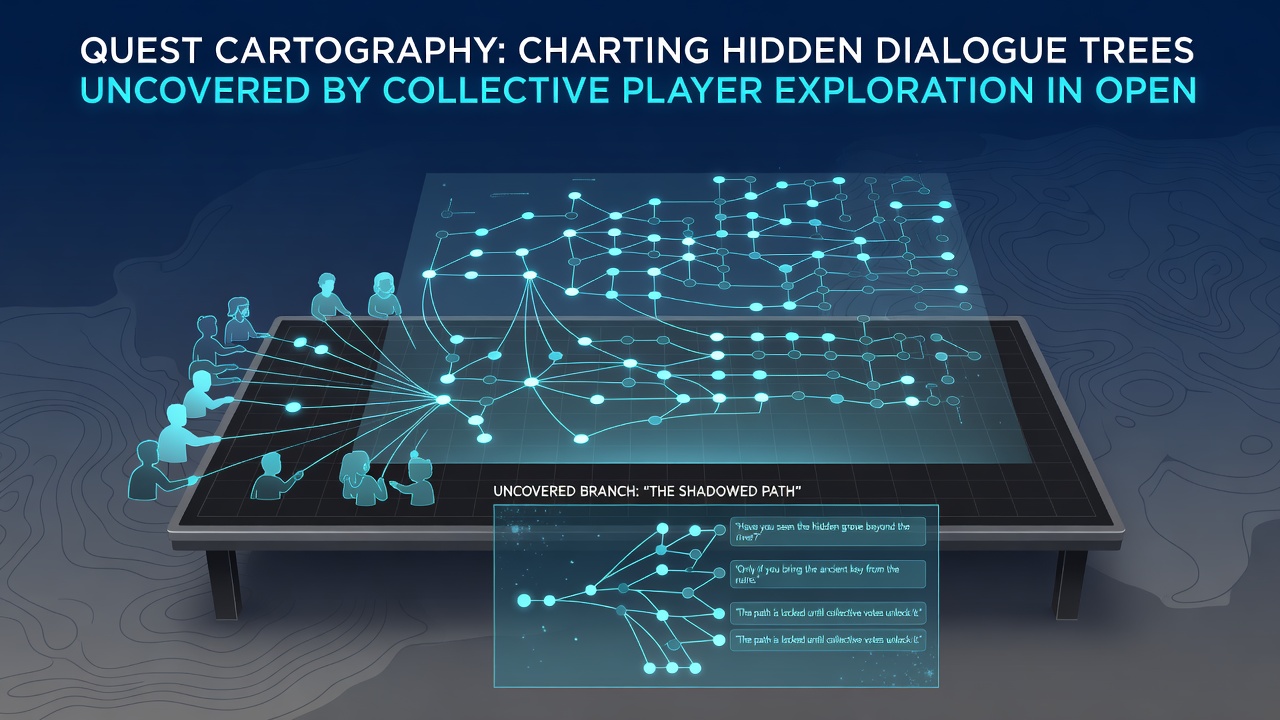
Academic researchers have examined these mapping communities in studies that analyze contribution patterns and accuracy rates over time. One project from a Canadian institution tracked how volunteer editors maintained consistency across large datasets, while another from an Australian university reviewed the speed at which new branches reach public view after game launches. Industry reports from organizations such as the Entertainment Software Association note rising player engagement with user-generated content that extends official materials.
Effects on Development and Player Experience
Developers monitor these community charts to identify areas where players struggle with opaque conditions, which can inform future design adjustments in patches or sequels. Clearer visibility into dialogue trees also helps newcomers navigate complex narratives without frustration from missed content. Speedrunners and achievement hunters rely on the maps to optimize routes and locate obscure triggers that affect completion times or unlock requirements.
Regional differences appear in documentation focus, with European groups often emphasizing cultural dialogue variants in localized releases while North American contributors prioritize combat-related speech options. These parallel efforts merge when cross-region players compare findings and fill gaps in each other's records. The result is a living archive that evolves alongside the games themselves through ongoing exploration and verification.
Case Examples from Recent Releases
One title released in late 2025 saw its primary dialogue map reach over 85 percent coverage within three months due to coordinated efforts across multiple time zones. Participants divided sections by region and faction allegiance, then merged results into a single interactive view that highlighted mutually exclusive paths. Another project focused on an older open-world entry that received a major expansion, where volunteers cross-referenced new lines against existing charts to isolate changes introduced by the update.
These cases demonstrate how collective input scales to handle the volume of content in modern releases. Data from the International Game Developers Association indicates that player-driven resources now supplement official strategy guides in many markets.
Conclusion
Quest cartography continues to expand as new open-world games introduce deeper dialogue systems and as existing titles receive ongoing support. The practice relies on distributed contributions that accumulate into reliable references for both casual and dedicated players. Through sustained collaboration, hidden elements surface systematically and remain available for future explorers who build upon the established foundation.