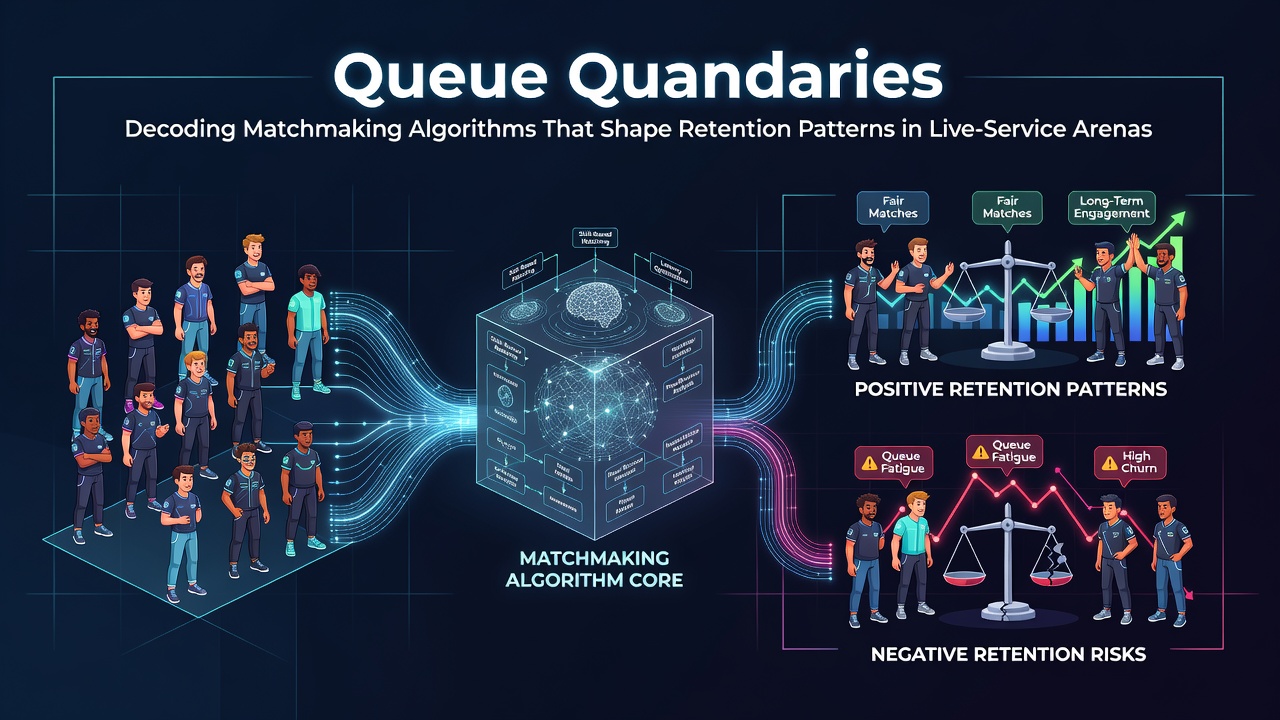
Queue Quandaries: Decoding Matchmaking Algorithms That Shape Retention Patterns in Live-Service Arenas
Live-service games depend on matchmaking algorithms that sort players into matches using skill ratings, connection speeds, and party sizes, and these systems shape how long participants continue logging in each week. Developers adjust parameters constantly because retention data from millions of sessions reveals clear patterns where balanced queues keep players active while repeated mismatches lead to drop-offs. In July 2026 several major titles released patch notes detailing tweaks to their queue logic after internal metrics showed seasonal declines in daily active users.
Core Components of Matchmaking Systems
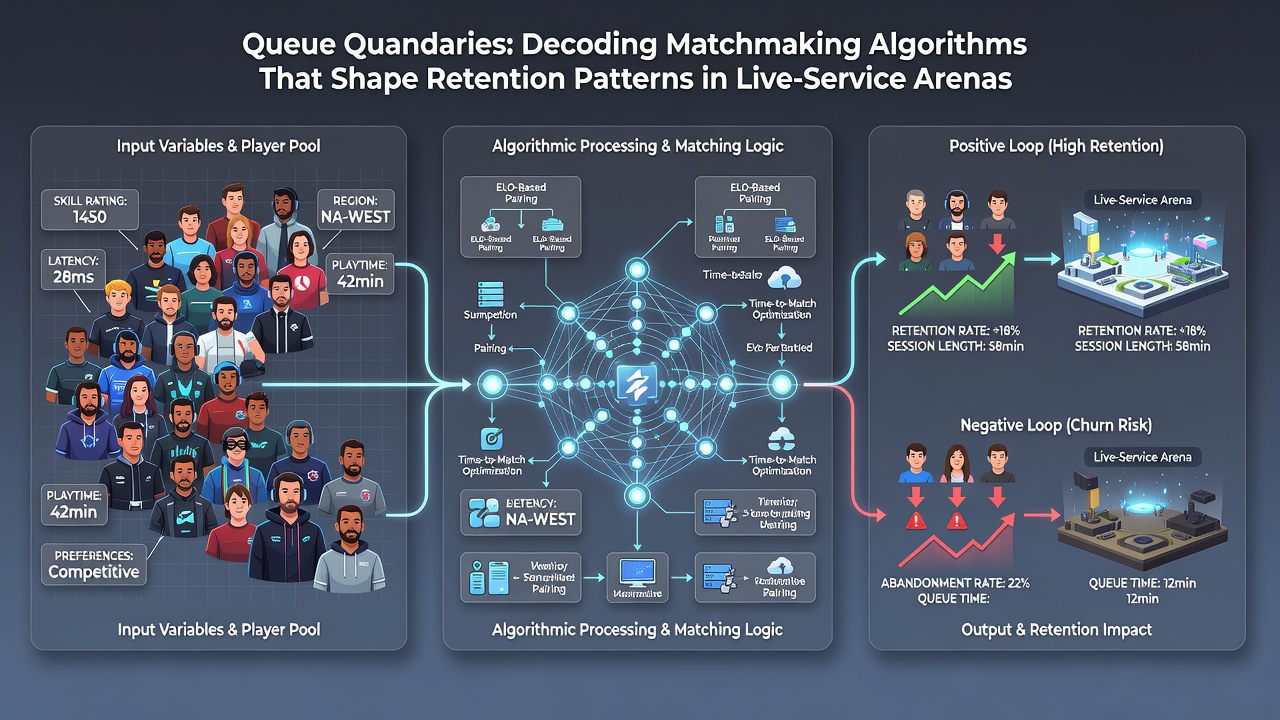
Skill-based matchmaking forms the foundation in most competitive arenas, drawing from hidden rating systems similar to ELO or TrueSkill models that update after every match based on win probability calculations. Latency thresholds filter out high-ping players to maintain fair conditions, yet these filters sometimes create longer wait times that frustrate participants in regions with smaller populations. Team balancing algorithms further split parties across sides to prevent stacked groups from dominating, and studies from the Entertainment Software Association indicate such features correlate with steadier session lengths across North American servers.
Additional layers include role preferences in hero shooters, recent performance streaks that temporarily adjust difficulty, and anti-smurf protections that detect unusual win rates. Observers note that these elements interact in real time, so a single queue decision can influence multiple retention signals like return rate within 24 hours or total hours played per month.
Retention Data Patterns Across Regions
Figures from industry reports show players who experience win rates near 50 percent maintain higher login consistency than those stuck in losing streaks, and this holds true in both free-to-play battle royales and subscription MOBAs. European data collected through regulatory filings reveals similar trends where queue fairness metrics predict churn rates more accurately than raw playtime alone. When algorithms prioritize quick matches over perfect skill alignment, some clusters see faster exits because repeated defeats erode motivation faster than brief delays.
Researchers tracking cross-platform titles found that mobile users often face different queue dynamics due to device-specific input variances, which can widen effective skill gaps even when ratings match. In July 2026 one Australian study linked improved party-balancing code to a measurable uptick in weekly retention for several live-service titles operating in Oceania servers.
Algorithm Adjustments and Player Behavior
Developers monitor post-match surveys alongside telemetry to refine parameters, and adjustments often target segments where players report feeling outmatched despite similar ratings. One common approach widens acceptable skill brackets during off-peak hours to reduce queue times, yet this risks introducing variance that affects perceived fairness. Data indicates regions with robust player bases tolerate tighter brackets without extended waits, while emerging markets require broader ranges that sometimes alter retention curves.
Case examples from fighting game circuits demonstrate how amateur scouting networks feed into broader matchmaking pools, creating unexpected matchups that test algorithm robustness. When updates roll out, retention dashboards typically track metrics for 30 days before confirming stability, and patterns from these periods help predict long-term engagement shifts.
Regional Regulatory Influences
Government bodies in multiple jurisdictions review transparency around these systems, and Canadian industry analyses highlight how clear communication about queue rules can support sustained player bases. Meanwhile, academic papers from institutions across Asia examine cultural differences in tolerance for competitive variance, revealing that some communities prioritize speed over balance while others value precise skill alignment. Such findings feed back into algorithm design cycles that continue evolving through 2026.
Conclusion
Matchmaking algorithms continue to serve as central retention levers in live-service arenas by determining match quality and wait experiences. Ongoing refinements based on regional data sets and behavioral telemetry allow developers to sustain engagement across diverse player populations, and future updates will likely incorporate more granular signals such as device performance and historical party dynamics. The interplay between these technical choices and measurable retention outcomes remains a key focus for teams managing competitive environments worldwide.