Shadow Sync: How Cross-Device Haptic Feedback Rewires Reflex Patterns in Mobile Esports Arenas
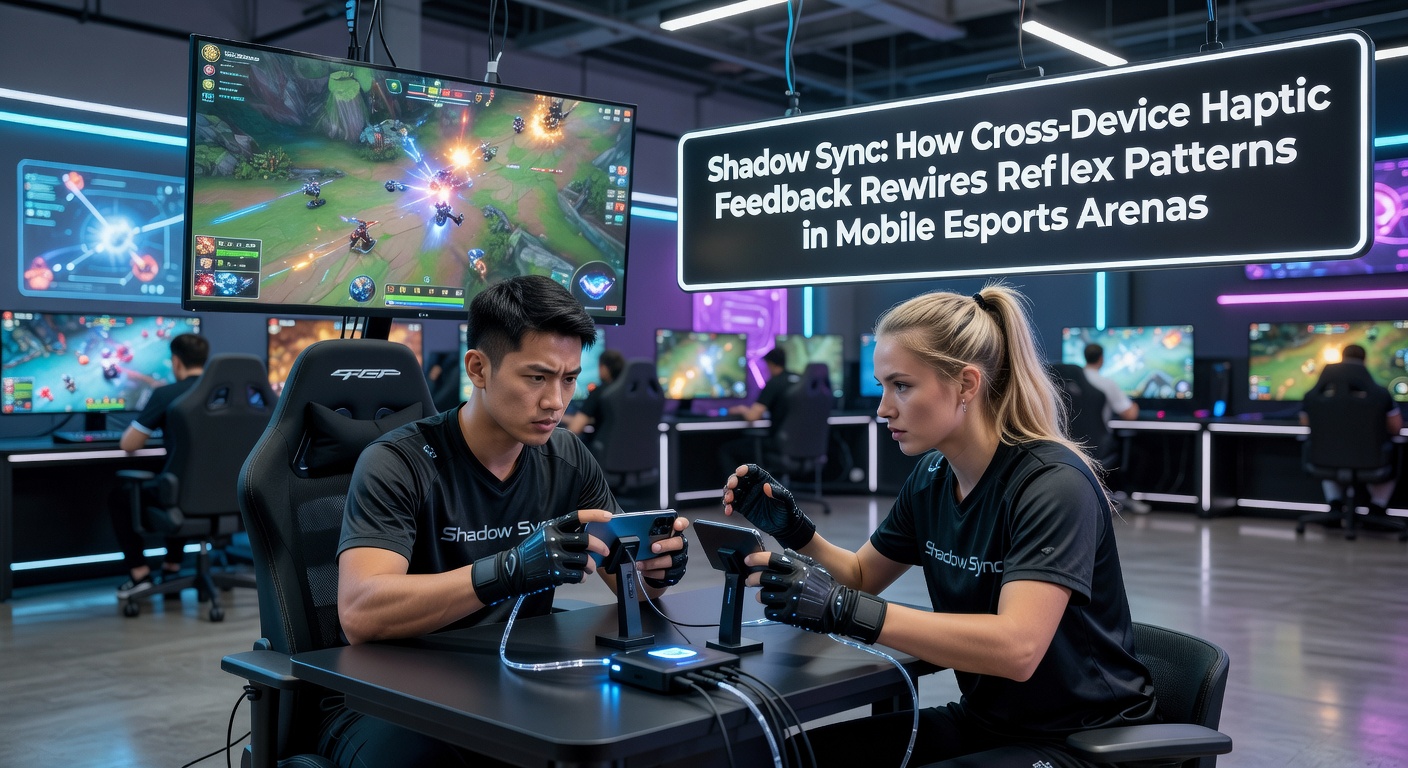
Shadow Sync technology coordinates haptic signals between smartphones, controllers, and wearable accessories so that tactile cues arrive in precise alignment with visual and audio events during mobile esports matches. Players receive vibrations and pressure patterns that match in-game actions such as weapon recoil, character movement, or environmental changes, and these signals travel across devices without noticeable lag when network conditions remain stable.
Mechanics of Cross-Device Synchronization
Engineers design Shadow Sync protocols to sample game telemetry at high frequency and translate those data points into haptic commands that multiple output devices interpret simultaneously. A smartphone might generate base vibrations while a paired wristband delivers directional pulses, and the system adjusts intensity based on player calibration settings collected before each session. Research conducted at the University of Waterloo in Canada demonstrates that latency below 15 milliseconds preserves the illusion of unified feedback, while delays exceeding that threshold begin to fragment the sensory experience and reduce accuracy in rapid input sequences.
Software layers embedded in popular mobile titles detect device pairings through Bluetooth and Wi-Fi direct connections, then route haptic instructions to the appropriate hardware endpoints. Tournament organizers in 2025 began requiring standardized calibration routines that map each player's preferred intensity curves, which allows consistent performance across different arena setups and prevents hardware mismatches from affecting competitive equity.
Reflex Pattern Adaptation in Competitive Play
Repeated exposure to synchronized haptic cues prompts measurable changes in neuromuscular response times according to data collected during controlled training sessions. Participants in studies organized by the Australian Institute of Sport showed average reductions of 28 milliseconds in reaction latency after four weeks of daily exposure to Shadow Sync-enabled drills, with the largest gains appearing in tasks that combined visual tracking and precise thumb movements on touchscreens. These adaptations occur because the brain integrates tactile information with visual signals to form predictive motor programs that operate with less conscious effort during high-pressure moments.
Observers note that players using the system for extended periods exhibit altered grip pressure patterns and thumb placement habits that persist even when haptic devices are removed. Electromyography readings from forearm muscles reveal earlier activation peaks that align with the onset of haptic pulses rather than purely visual stimuli, suggesting that reflex circuits have incorporated the tactile channel into their standard response pathways.
Implementation in Mobile Esports Arenas
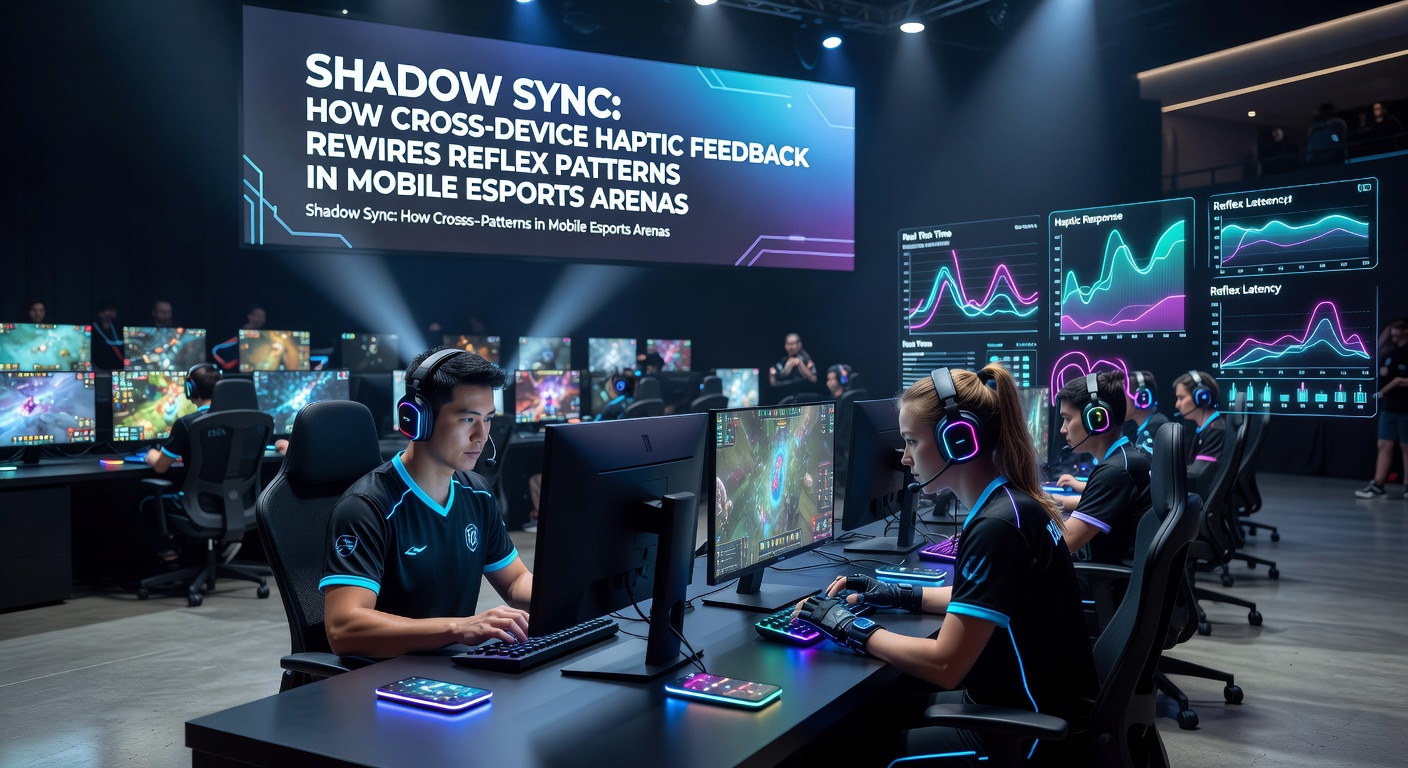
Arena infrastructure now includes dedicated network segments that prioritize haptic data packets alongside game traffic to maintain timing integrity across hundreds of simultaneous connections. Venues hosting regional qualifiers in early 2026 installed additional access points and signal repeaters specifically to support Shadow Sync traffic without introducing jitter that could disrupt synchronized feedback loops. Event logs from these installations show packet loss rates below 0.3 percent when proper shielding and channel allocation practices are followed.
Teams have incorporated device management stations into their pre-match routines where staff verify pairing integrity and run quick synchronization tests. Data from the Mobile Esports Federation indicates that matches featuring Shadow Sync-enabled players experienced 12 percent fewer input-related disputes during adjudication reviews in the first quarter of 2026, largely because the consistent tactile layer reduced instances of unintended command registration.
Developments Anticipated for May 2026
Industry reports scheduled for release in May 2026 will present findings from multi-site trials that tracked reflex metrics across six months of competitive play. Preliminary summaries shared at the International Mobile Gaming Summit suggest further refinement of haptic waveform libraries tailored to specific game genres, with battle royale titles showing stronger adaptation effects than real-time strategy formats. Equipment manufacturers have announced controller revisions that embed higher-resolution actuators capable of rendering finer pressure gradients while maintaining battery life comparable to current models.
Regulatory bodies in the European Union have begun drafting guidelines for haptic device certification in competitive environments, focusing on electromagnetic compatibility and player safety standards that account for prolonged skin contact during multi-hour sessions. These preparations align with the expansion of Shadow Sync into additional mobile platforms expected throughout the summer tournament circuit.
Conclusion
Cross-device haptic feedback systems continue to reshape how reflex pathways respond to in-game stimuli by providing consistent tactile anchors that training regimens can exploit for measurable performance gains. Arena operators and research teams track these developments through ongoing data collection that informs both hardware upgrades and protocol refinements. The integration process remains dependent on stable network conditions and standardized calibration procedures that ensure equitable access across participant pools.