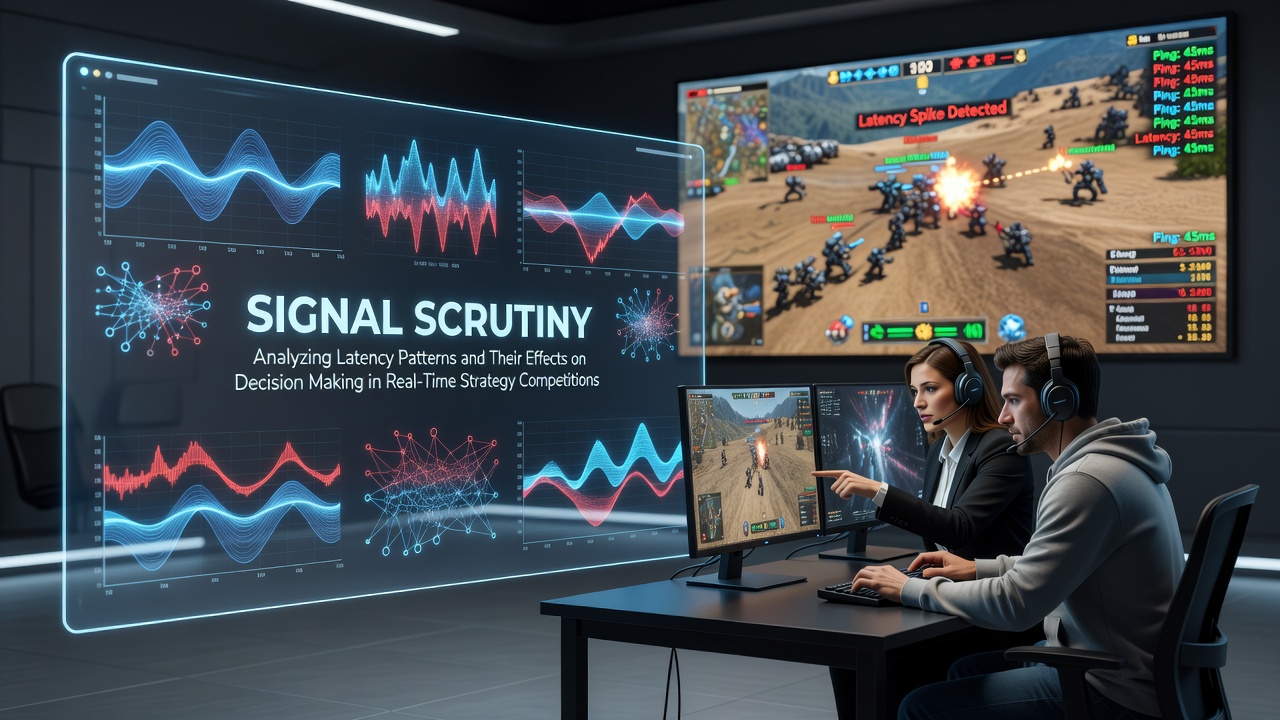
Signal Scrutiny: Analyzing Latency Patterns and Their Effects on Decision Making in Real-Time Strategy Competitions
Latency patterns in real-time strategy competitions arise from network delays that interrupt the flow of commands between players and game servers, and researchers have documented how these interruptions alter timing windows for unit deployment, resource allocation, and counter-strategy execution. Studies from institutions such as the University of Tokyo's Game Informatics Lab show consistent correlations between ping fluctuations above 50 milliseconds and reduced accuracy in micro-management sequences during professional matches.
Observers note that jitter, which refers to irregular variations in packet arrival times, creates unpredictable response gaps, and this forces competitors to adjust their predictive models for opponent actions. Data collected across major tournaments indicates that matches with average latency exceeding 80 milliseconds see a measurable drop in successful simultaneous unit maneuvers, particularly in games that rely on rapid build-order execution like StarCraft II and Age of Empires IV.
Common Latency Patterns in Tournament Settings
Packet loss events occur when data packets fail to reach the server, and tournament logs from 2025 events reveal spikes during peak server loads that last between 200 and 800 milliseconds. These moments often coincide with large-scale battles where dozens of units move simultaneously, and the resulting desynchronization requires players to issue redundant commands to maintain control. Regional server clusters in North America and East Asia demonstrate different baseline patterns, with East Asian networks showing higher consistency but occasional routing delays through international gateways.
Bufferbloat contributes another layer when router queues expand under heavy traffic, and measurements taken during July 2026 qualifiers for the ESL RTS Championship series indicated that affected connections experienced effective latency increases of up to 120 milliseconds even when raw ping remained stable. Players adapt by spacing out command inputs, yet this adjustment reduces the window for reactive play against aggressive strategies.
Impact on Decision-Making Processes
Decision cycles in real-time strategy games operate on sub-second timescales, and latency introduces delays that shift the perceived state of the game world. When a player issues an attack command, the server processes it after the round-trip time completes, which means opponents may already have moved their units by teh time feedback arrives. Research published by the European Interactive Software Federation in 2025 tracked professional players across 340 matches and found that latency above 60 milliseconds correlated with a 14 percent increase in mis-timed ability activations.
Resource management choices suffer when delayed information about enemy expansions reaches the player, and this forces reliance on earlier scouting data that may no longer reflect current conditions. Those who have reviewed frame-by-frame replays from high-level competitions observe that competitors often overcommit to defensive structures after experiencing sudden latency spikes, because they cannot confirm whether an attack has actually begun.
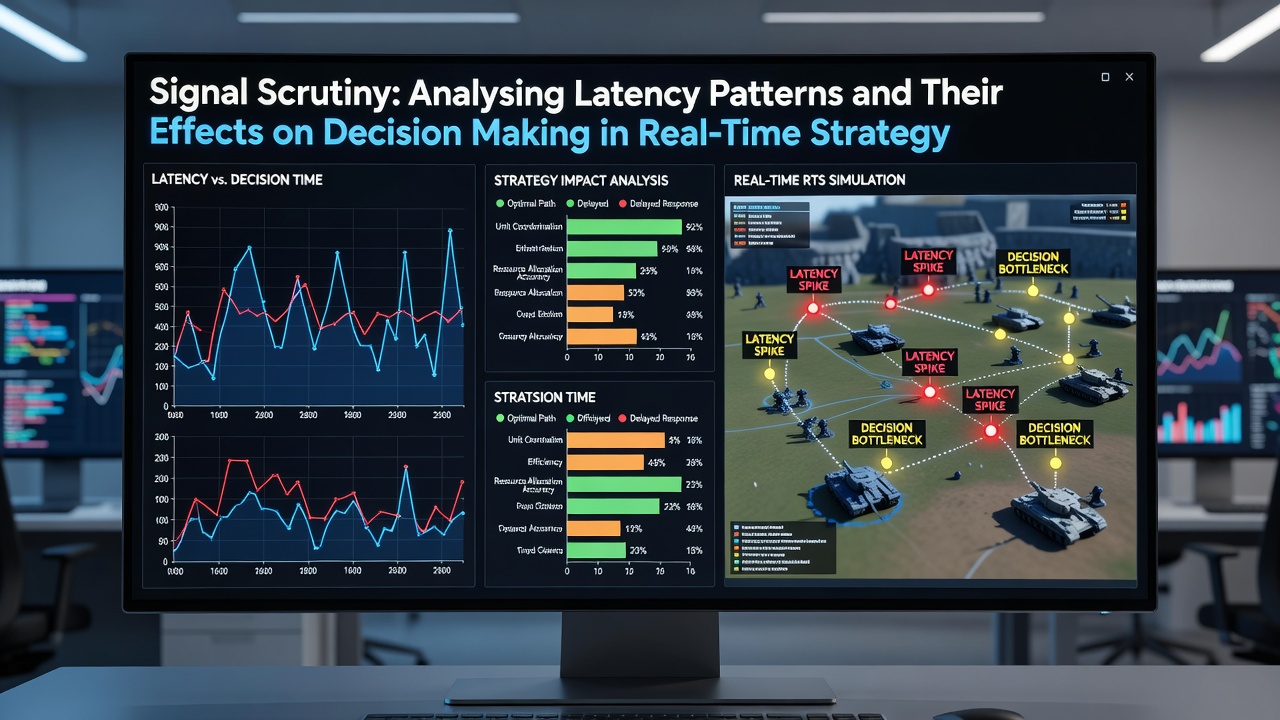
Technological Mitigations and Their Limits
Game developers implement client-side prediction and lag compensation algorithms that attempt to smooth command execution, yet these systems introduce their own artifacts when latency patterns deviate from expected models. In July 2026, several RTS titles updated their netcode to include adaptive tick rates that adjust based on real-time jitter measurements, and early tournament data suggests these changes reduced command desync incidents by approximately 22 percent in controlled tests. However, the same updates sometimes caused visual inconsistencies when players on stable connections interacted with those experiencing variable latency.
Professional teams employ dedicated gaming routers and optimized routing software that prioritize game traffic, and organizations such as the Asia-Pacific Esports Federation have published guidelines recommending specific Quality of Service configurations. Despite these measures, sudden route changes through ISP networks can still bypass local optimizations and produce latency patterns that no amount of client tuning fully resolves.
Measurement Methods Used in Competitive Analysis
Analysts record latency metrics through in-game telemetry combined with external packet capture tools, and this combined dataset allows reconstruction of decision points relative to actual network conditions. Figures released by the Canadian Centre for Digital Gaming Research reveal that top players maintain command accuracy above 85 percent only when latency variance stays below 15 milliseconds. Teams now integrate these measurements into post-match reviews, comparing predicted outcomes against actual results to identify where network conditions influenced strategic choices.
Live monitoring during events has become standard practice, with officials displaying latency graphs for broadcast audiences when noticeable delays occur. This transparency helps viewers understand why certain actions appear delayed or why a player hesitated during critical moments.
Conclusion
Latency patterns continue to shape competitive outcomes in real-time strategy events through their direct influence on command timing and information availability. Tournament organizers and developers maintain ongoing efforts to standardize network conditions, while players develop adaptive techniques that account for measured delays. Continued data collection from events scheduled through late 2026 will provide further insight into how evolving network technologies interact with the demands of high-level RTS play.