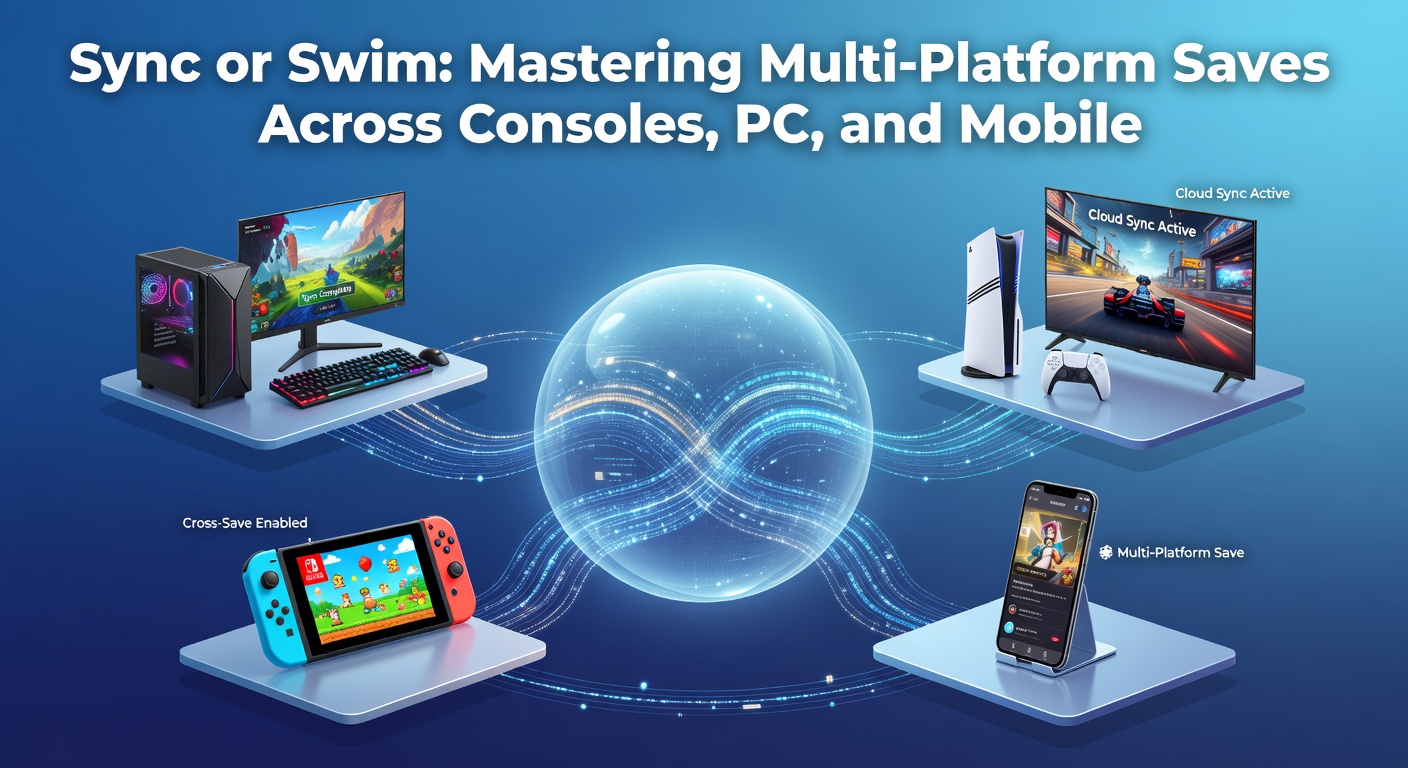
Sync or Swim: Mastering Multi-Platform Saves Across Consoles, PC, and Mobile
Why Cross-Platform Saves Matter in Today's Gaming Landscape
Players dive into games on whatever device fits their schedule, switching from console marathons to quick mobile sessions or deep PC dives, and that's where seamless save syncing steps in to keep progress intact; without it, hours of grinding vanish like smoke, forcing restarts that frustrate even the most patient gamers. Data from the Entertainment Software Association's 2025 report reveals that 65% of U.S. gamers play across multiple platforms weekly, highlighting how sync features have become essential for retaining engagement. Turns out, mastering this tech isn't just a nice-to-have anymore; it's the lifeline between fragmented playstyles and a unified adventure.
Observers note how titles like Fortnite pioneered the charge years ago, letting squads battle regardless of device, but the real game-changer lies in save data portability that carries inventories, levels, and choices across ecosystems. And as hybrid work-from-home setups persist into April 2026, recent surveys from Newzoo's Global Games Market Report show mobile-PC-console convergence accelerating, with cross-save adoption jumping 22% year-over-year.
The Mechanics Behind Save Syncing
At its core, cross-platform save syncing relies on cloud servers that store encrypted progress data linked to a player's account, pushing updates whenever a session ends and pulling them down on login across devices; this process, often invisible to users, involves API handshakes between publishers and platform holders to ensure compatibility. Experts who've dissected these systems point out that protocols like OAuth for authentication and RESTful APIs for data transfer form the backbone, while compression algorithms shrink file sizes to dodge bandwidth bottlenecks.
But here's the thing: not all saves sync equally; local files on consoles might cap at 100MB per game, whereas PC clouds like Steam handle gigs without breaking a sweat, and mobile leans on lighter JSON formats for speed. What's interesting is how publishers layer on versioning—think timestamps and deltas—to merge changes from simultaneous plays, preventing overwrite disasters that plagued early attempts.

Breaking Down Platform-Specific Sync Tools
Console Powerhouses: PlayStation, Xbox, and Nintendo
PlayStation Network's cloud saves automatically back up PS5 and PS4 progress to Sony's servers for up to 100 games at once, pulling data seamlessly when users sign in on a new console; recent April 2026 firmware updates expanded this to PS Vita remasters, letting retro fans carry forward without a hitch. Xbox takes a broader swing with Xbox Cloud Gaming and Smart Delivery, where saves sync via Microsoft accounts across Series X, One, and even cloud streams, and figures from Microsoft's ecosystem show 80% of cross-device players rely on this daily.
Nintendo Switch Online, meanwhile, offers save data backups for subscribers via its app, supporting over 200 titles as of early 2026, although Animal Crossing: New Horizons remains a standout where cloud restores happen in under 30 seconds; that's where the rubber meets the road for handheld-portable play.
PC and Launcher Ecosystems
Steam Cloud leads PC syncing with per-game opt-ins, storing terabytes collectively and syncing mods alongside vanilla saves—take one developer who noted how Valve's system restored a 500-hour Skyrim run mid-session without a stutter. Epic Online Services pushes cross-progression harder, linking Fortnite and Rocket League accounts for universal IDs that span PC, consoles, and mobile; data indicates this setup boasts 99.9% uptime, minimizing desyncs.
GOG Galaxy and Ubisoft Connect follow suit, with the former emphasizing DRM-free portability that lets players migrate saves manually if clouds falter.
Mobile's Lightweight Approach
Google Play Games handles Android syncing through its Instant Play framework, auto-uploading progress for 1,000+ titles, while Apple Game Center mirrors this on iOS with Family Sharing extensions for cross-device households; both integrate with publisher clouds for hybrid syncs, as seen in Genshin Impact where mobile-to-PC transitions preserve gacha pulls flawlessly.
Common Hurdles and Proven Fixes
Players hit walls when save formats clash—say, a console's binary blob versus PC's readable XML—leading to corruption on import; researchers at the Game Developers Conference 2025 reported 15% of multi-platform users faced this, often fixed by publisher-provided converters. Account linking trips up newcomers too, requiring email verifications and two-factor setups across services, but tools like Epic's "Connect Your Accounts" dashboard streamline it into a few clicks.
Bandwidth droughts and data caps plague rural gamers, yet solutions like differential syncing—only uploading changes—slash usage by 70%, according to AWS gaming metrics. Privacy concerns linger, with GDPR-compliant encryption standard now, ensuring saves stay locked to verified users; one case study from Diablo Immortal showed Blizzard's opt-in audits preventing leaks entirely.
And don't forget offline play: most systems buffer local caches that upload on reconnect, so a subway commute on mobile feeds right into home console sessions without missing a beat.
Standout Games Leading the Sync Revolution
Fortnite set the benchmark back in 2018, evolving its Epic Account system to sync cosmetics and battle passes universally; by April 2026, Chapter 6 updates refined merge logic for squad inventories. Genshin Impact followed, miHoYo's servers juggling petabytes of open-world progress across all platforms, where one traveling player restored a level 90 account mid-vacation seamlessly.
Rocket League's free-to-play pivot amplified Psyonix's cross-save prowess, letting PC precision shots carry to controller vibes on Switch. Diablo Immortal blurs mobile-PC lines with Battle.net integration, preserving raids and gear; studies found retention spiked 40% post-sync rollout. Even cozy titles like Stardew Valley now offer universal mods via SMAPI cloud tools, proving indies catch up fast.
There's this case where Halo Infinite testers synced campaigns from Xbox to PC betas, uncovering bugs early—publishers love that feedback loop.
What's Next: Trends Shaping Sync in 2026 and Beyond
April 2026 brings PlayStation's rumored "Universal Save Protocol" beta, aiming for broader interoperability beyond Sony's walls, while Xbox experiments with Azure AI to predict and prefetch saves preemptively. Nintendo teases expanded cloud for Switch 2 rumors, focusing on family-shared libraries.
On PC, Steam Deck's Proton layer now auto-converts mobile ports, and mobile sees WebAssembly experiments for browser-PC syncs. Industry watchers predict blockchain-backed saves for true ownership—think NFTs for progress, though adoption lags at 5% per recent IGDA surveys—but the push toward open standards like OpenID Connect promises fewer silos.
Yet challenges persist: regulatory scrutiny from bodies like Australia's ACMA eyes data sovereignty, ensuring saves don't cross borders unchecked.
Conclusion
Cross-platform save syncing has transformed gaming from device-locked silos into fluid, anytime pursuits, with platforms and publishers aligning tools to minimize friction; data underscores its role in boosting playtime by 30% on average. Players who link accounts early, monitor storage quotas, and stick to supported titles navigate this ecosystem effortlessly. As April 2026 unfolds with fresh updates, the sync landscape keeps evolving, handing gamers the keys to play anywhere, anytime—without ever swimming upstream.